Episode 1

Hunter’s Light, Pella’s Quest

At the conclusion of Thunder Prime: Fog Island, Pella Soames is twelve, an orphan, it would seem. She is the victim of circumstances beyond her control. But she has no intention of remaining a victim. She refuses to be dependent on anyone as she sets out to find her mother. Is Trish Soames still alive? Is she a slave in the freehold of Brutus Tauk, a Chandorian overlord?

Now a grown woman, with a transport business of her own, Pella uses all the resources available to find out the answers to these questions and rescue her mother. But getting on Chandor isn’t all that easy. Getting information is even harder. And she must take on work to support her quest. She and her crew of four keep her transport ship, the Polaris, functioning as it moves people and cargo across the known universe, a lucrative business that gets in the way of Pella’s goal. To find her mother…

ORP Cover imageAboard Polaris

The woman beats at her attackers. Her body splits apart as a RHACS drub enters her. Not the first one; not the first time.

“Run,” the woman shrieks. “RUN!”

And the child does.

Pella awoke bathed in sweat and dripping tears. A shudder of guilt and horror scraped like thorns across her skin. A familiar tone penetrated her wounded brain as she rolled off the bunk and stood.

“Soames!” Strong, controlled, unlike the turmoil centered in her gut.

“Captain, the shuttle is cleared to land on Chandor.”

Commander Gouyen Walker’s statement knocked residual effects of the nightmare to the back of Pella’s mind.

“Noted. Who’s taking him down?”

“Aoife. Wants to get him to talk.”

Not going to happen. Their passenger’s poor disguise fooled no one, but if he wanted to cling to the illusion of anonymity, so be it. His privilege. He’d hired them for transportation, not companionship. She couldn’t help but wonder. Goodwin Harp, self-appointed leader of New Way traipsing around the galaxy on a reconditioned transport?

“Hope she doesn’t expect much,” Pella said

“You know Aoife, looking to gain an inside track.”

She let the comment pass. “Notify me when the shuttle has landed on planet.”

“Yes, Captain.”

Pella dragged a shaky hand down her face. She had not intended to sleep, but several months in space jumping from one launch platform to another drove her to her bunk, and opened a door to the pain of her nightmares.

Like it mattered, awake or asleep, the dream pursued her.

She hid like a coward while Re-Hab Assimilation Camp human drubs traded off assaulting her mother. And then she ran away.

Pella hated to remember, but could not forget. It is what drives her. Somewhere in the galaxy her mother lives. Hear search will not end until she finds her.

Pella suspects her treacherous father knows where her mother is. She wants to find him, too, and ask that very question. After all, her mother is a captive because of his deceit.

Bile rose like a hot geyser. She hurried to her bathroom expecting to upchuck, but a few deep breaths and a cold cloth on her face calmed her unsettled system.

Her reflection in the mirror over the sink was anything but impressive, but she appeared to be in control, not at all the bundle of anxiety that ravaged her insides. Discipline was second nature to Pella.

“Captain?”

“Soames, here.”

“The shuttle has landed on Chandor.”

“Thanks.”

“And Captain?”

“Yes?”

“Adams’ cabin is clear and unlocked. Your visit will go unrecorded.”


Goodwin Harp
The gilded city flashed in the setting sun. Voluptuous exotic flora breathed poison into the atmosphere. Despite his mask and protective gear Goodwin Harp shivered, but didn’t slow down. He matched Emtet J’fal’s rapid pace step for step.

Harp’s rejuvenated body, massive ego, wealth, and an incredible memory convinced him he was superior to all other beings. Behind the mask and protective suit Harp had the appearance of a youthful and robust mid-fifties. His brilliant mind retained data he considered of import, including the contents of the book. He was the book. Should something happen to him before he reached his goal, everything would die with him, but he would not fail. He would become the greatest human who ever lived, bringing the Deity of Deities to the galaxy. And he would be immortal.

The skin on his face stung as icy fingers of cold penetrated the mask. Oh, how he hated this accursed place, but he needed these beings to solidify his standing galaxy-wide and establish New Way as the only way. First, he had to get to Bonnak Wallace, a direct descendant of the planet’s original settlers. Without Wallace’s support, New Way on Chandor was dead. And there were other compelling reasons to gain access to the planet. Perhaps it was best in the long run that his emissaries had been rejected, forcing him to come instead. Harp needed Wallace’s cooperation, but he needed Chandor’s rich resources of minerals and essential industrial gemstones more. He would not give up until he won Wallace over.

J’fal raised a cautionary hand. Harp stopped beside him with eyes lowered as a wizened Chandorian passed by flanked by guards and a bevy of exquisitely adorned Chandorian fems. Ugly as mud, to Harp’s eye, but no doubt real beauties by Chandorian standards.

So why, he wondered, did the males of Chandor seek true human fems, paying any price to possess one? Testosterone? It plagued every male in every species. Harp no longer had interest in fems for sexual purposes. When his sex drive diminished, he was glad to be rid of the animal urges of his body. Sex got in the way of ambition. Fems were nothing but trouble. For the same reason, he never had progeny. Filthy beggars all of them.

J’fal waved his hand bringing Harp back to the moment. He hitched his backpack higher on his shoulders as they moved on toward the government bureau entrance.

The door sighed open as they drew near and closed behind them with a hollow thud. Darkness was instant, followed by pinpoints of light that flashed randomly. Harp stumbled into J’fal.

“Fo can deca!”

Harp stilled, hiding the fury that raged through him. To have an inferior call him a clumsy shit deserved reprimand, but not now, not under these circumstances. But he would not forget.

A panel slid open revealing a well-lit austere waiting area. As they stepped through J’fal motioned to an industrial bin.

“Dispose of the protective garment and be seated. Wait until you are called. When you are ready to leave, I will bring a replacement protective suit and return you to your transportation.” With that he strode away and left through a door marked in universal galactic: No Entrance. Violators Will Be Detained.

Rumor had it that detainment meant being sent to the Chandorian mines never to be seen again.

Having been unceremoniously discarded like stinking garbage, Harp did as instructed. Under the protective garment, he wore a form fitting body suit. This he covered with a golden-threaded tunic from his backpack. His silver white hair, released from the confines of the protective suit, cascaded down his back in a shimmering fall. Confident his appearance was now appropriate for meeting the ruler of Chandor, he turned his attention to his surroundings.

Humanoid Assigned Need Artificial Intelligence units sat at terminals spaced around the perimeter of the room. At the center was an arrangement of upholstered chairs for the comfort of those who were waiting. The seats were empty.

Harp approached one of the male ANAIs. It continued working as though he didn’t exist. Harp resisted the temptation to pull out his weapon and obliterate the useless pile of components that made up the pseudo-human, and then remembered, he wasn’t carrying a weapon. It was not allowed.

Harp resented talking to any ANAI as though it were human, but he did not intend to spend hours in the waiting area when he was the only one with business to conduct.

“When will Director Jonfellow be available?”

The ANAI worked without pause as it spoke.

“You will be called.”

“I have an appointment.”

“You will be called.”

Harp seethed. He needed to make his case to Jonfellow and speak with Wallace. As a man of consequence across the galaxy it was reprehensible to be put off in this manner. Inexcusable! His lips thinned and for an instant a hint of his former visage appeared, his eyes fired by hate for everything beyond his control. Nevertheless, he was here as a petitioner. He must focus on his objective. He must bide his time.


Aboard Polaris
Pella sat back on her heels and looked around Harp’s Spartan cabin. There was nothing that didn’t support his claim to be James Adams, a galactic trader. Of the fourteen passengers the Polaris carried when it left Earth, Harp was the only one booked to Chandor, the planet most distant from Earth. Harp had kept to himself, requesting meals be sent to his cabin. He was traveling alone, no aides or servants. Suspicious. Every time Pella had seen him on VidNet, he was surrounded by guards and acolytes. She shrugged it off. No business of hers. He’d paid handsomely for privacy and special treatment. With his creds in her account, her business with him was done except for getting him safely to Alpha 9, his destination after leaving Chandor.

She accepted that her uneasiness stemmed from Adams/Harp being on Chandor, the place she wanted to be. Not that the Polaris crew hadn’t been on Chandor, but only with access to Shirefel, the only metro on the planet. It was one thing to deliver cargo to intake; quite another to have access to the holdings of the elite. And that was Pella’s goal. To get to the holding of Brutus Tauk. What she would do when she got there ran headlong into a wall of ignorance. It seemed an impossible goal. She had no contacts on planet and no way to access protective gear, the only way true humans, and most off worlders, could survive outside the city.

As she left Harp’s cabin and headed for command bay, she trailed her fingers along the walls in passing, still delighted – and sometimes unbelieving – that this beautiful ship belonged to her. Before it was the Polaris, it had been Thunder II, the second transport in the Casey clan’s original company. As the company grew, the transport had been relegated to use for parts. During the time she was still working for Jake Casey, she had asked to purchase it. No, he’d said, just take it. It’s no use to the company. Pella couldn’t abide the idea of accepting what amounted to charity. The Caseys had done enough for her. She struck a deal to haul cargo and passengers at half rate with the rest of her income going to pay the debt on Thunder II.

Three intense years of hard work earned her enough to make the ship hers. It had a new name and a new purpose. With the help of her crew she’d honed the Polaris into a sturdy craft, and created a successful transport company ferrying people and cargo about the galaxy.

She should have been content, maybe even that thing referred to as happy, but every time she began to get comfortable, she remembered her mother’s screams.


Thank you for reading the first episode of Hunter’s Light, a sci-fi novel featuring Pella Soames, a young woman who survived an attack on her village by Re-Hab Assimilation Camp humans (RHACS) when she was a child. RHACS destroyed the life she had known. Now, years later, she sets out to find her mother and get revenge against her father for his betrayal. To continue reading about Pella’s adventures, click below to buy a subscription to receive episodes as they are posted. You will be provided with a pass code to access the new episode on Friday of each week.

Subscription

Access to all episodes of Hunter’s Light, The Quest. When the book is complete, you will receive a signed print copy. Episodes will post weekly on Friday.

$16.00


Visibly invisible

pexels-photo-268833.jpeg


I want approval,

So I work to please others.

I seek accolades,

So I put in more time than anyone.

I must be remembered!

So I devote my time to selfless acts.

I make every effort to not offend,

So I don’t speak my mind.

I live to be noticed,

So I won’t be invisible.

In the end

have I pleased anyone?

Is acknowledgment given with rolled eyes?

Are my acts selfless or selfish?

Am I lost in the crowd?

Do I feel used and abused?

Do I ever take a stand?

Am I invisible?


Note: I wrote this after reading a book about women who try too hard and end up wearing themselves to a frazzle. Trying to be all things to all people is a sure road to becoming an emotional and physical train wreck.


Please Follow, Like, Comment and Share this post. Your feedback is important to me. Thanks for reading One Roof Publishing Magazine. The publisher may be reached by e-mail at fsharon@msn.com.

What makes Las Vegas special II

Viva Las Vegas! Sign at Charlie's
A sign at Charlie’s Bakery & Cafe on Douglas Ave. – Las Vegas, NM

Earlier in February I wrote a post asking, “What makes Las Vegas special?” I posted a similar question on Facebook. I got such great feedback from the Facebook post, I decided to print all the responses here and share them. These responses tell the story of Las Vegas from the heart of the people who live here. If you want to add your thoughts, please add a comment, or e-mail fsharon@msn.com and I’ll add it to this list so it becomes part of the main body of the post.

Mark Gillingham: There is live music nearly everywhere you look in Lil LV.

Kayt C. Peck: This town has more talent per capita than any place I’ve ever lived.

Victoria Evans: NMHU music department and their wonderful shows that showcase students and community members.

Annette Velarde: Great food, artists, galleries, Fiestas, Roughrider Rally, history, film, tourism, astronomy, clear skies, music, outdoor adventures, animal watching, true stories of outlaws, railroad history, cowboy history, ghosts, educational institutions…

Joan Minner: Free movies at Ilfeld, great pizza, a sweet little bowling alley, art galleries, great music, movie theater, and the friendliest people I’ve ever met. I could go on and on, but I don’t want to repeat what others have said. Oh – and a great university that is just getting better and better

Patrick Alarid: Rich multi-cultural history, superstitions, architecture and faith.

Pam Abreu: I love that I can run in to people I have known for decades and people I have just recently met. Having a shared history and shared memories with so many people is priceless.

Barbara Casey: LV has an abundance of volunteers who provide necessary services to the people in the community. CASA volunteers, CCHP, Samaritan House, Literacy Council, EDC, Friends of the Library, Food kitchens… the list goes on and on!

Carol Cutler Linder: Diversity of the people, the landscape, the buildings, the views (expressed and visualized), ideas, weather, talents, education levels, educational opportunities, ages, wildlife, and most of all friendships

Tori Crawford Conway: After being away for a year, I miss playing with the Rainbow Ringers at the Presbyterian Church.

Juli Salman: Great weather for exercising outdoors, friendly community of runners and cyclists, Highlands University is ranked near the top of the nation’s schools for ROI and upward mobility.

Judy Long: Incredible sense of community and support.

Richard Lindeborg: No matter where I am in town, I am just a few minutes away from seeing or being in the mountains or the prairies,

Rosalie Lopez: The uniqueness and acceptance of Las Vegas. More to do here and to be involved with here, than most towns this size.

Lupita Gonzales: Came here over 50 years ago because of NMHU, and that was just the beginning of my odyssey!

Jill Baskerville: Kissing the sunshine

Kathy Hendrickson: All of the above plus, Montezuma Hot Springs and Montezuma Castle/ UWCUSA, Historic Plaza Hotel, Castaneda Hotel, Media Arts Building, which is in the Trolley Barn ( McCaffrey Building), and Mayeur Project, the amazing Dwan Light Sanctuary. Over 900 Historical homes and buildings. Historic home tours and walking tours.  The theme for PWAP (Places With a Past) in August will be The Rejuvenation of Las Vegas! All these places have or – are being – rejuvenated! Spend a day touring Las Vegas with Southwest Detours. www.southwestdetours.com.

Rosa Latimer: Creative energy abounds!

Jim Abreu: Smiles, friendly greetings, classic upward nod of the chin to say “Hi.” Grit, Charm…Heart…

Nan Colalillo: Fundraising dinners by non-profits.

RaeDawn Price: When I think about why I love living in Las Vegas, I think about family and the friends that have become family. I love the coffee drinkers at the different restaurants. Seeing a group gathered over a cup of coffee warms my heart.

Cindy Collins: New businesses and renovations: E. Romero Fire & Acequia Museum, Castaneda Hotel, the Skillet, Olivia’s Cafe, Mayeur Projects, Borrachos, JC’s Pizza, Indigo Theater, PLAZA HOTEL, Palms Event Center, Serf Historic event venue, Charlie’s Event venue, NMHU Media Arts Center in old trolley building, 70 trees on Douglas, new benches and trash cans, Rawlins Building with upstairs apartments and two retail spaces!

Kathleen M. Rodgers: Castaneda Hotel! Can’t wait to stay there once the renovations are done.

Richard Lindeborg: Moving back to Las Vegas after four decades away, it was a delight to discover the connectedness of having peers whose grandparents and parents I knew, as well as their children and grandchildren.

Lydia Palomino: The beautiful people… traditions

Carol Ditmanson: Two national parks – Fort Union National Monument and Pecos National Historical Park in our neighborhood!

Sherrie Doke: We still miss LV so much and we moved away 27 years ago! It is such a unique, caring and busy place to live. The people are so varied and talented.

Paula E. Geisler: Arrott Art Gallery (now closed)

Jeanette Yara: History

Izzy Manning: People look you in the face and say good morning and smile.

Connie M. Coca: Plaza Hotel, Montezuma Castle, Highlands University, historical buildings and homes. Culture, music, language. The 4th of July Fiesta and especially friends and family. Radio stations. Mexican or southwestern New Mexico food. Our churches of all denominations.

Juanita Estrada: Who is not to Love a community where everybody knows everybody and every body’s business, but yet love one another. Viva Las Vegas!

Rose Contreras-Taylor: Beautiful parks – Plaza park, Lincoln Park, Carnegie park

Kristin Reidy: Sharon, I love working in Las Vegas and can never get enough peaceful time at the ranch. At work I often call a patient into an examination room for their eye appointment and they ask if they can wait a little longer so they they can finish a conversation with an old friend! The beauty of Vegas. Time stops and we appreciate what matters.

Kerry Holderbaum: The sight of Hermit’s Peak brings a smile each time I come home and a tear each time I leave.

Margaret Villanueva: Driving north on 84,  the old adobe church in Gilia and the sight of Hermit’s Peak in the distance, the piñones…  Almost Home!

Dolores Dodie Maese: Our nearby public lands!

Susie Tsyitee: We should brainstorm and celebrate our assets at least once a year! Thanks, Sharon! I love this thread!

Lydia Lovato: What I like about Las Vegas are the people when someone dies they are there to support you and comfort you the community pulls together.

Charlie Sandoval: History, culture, and New Mexico Highlands University

Robert Vander Meer: Location, location, location!


Please Follow, Like, Comment and Share this post. Your feedback is important to me. Thanks for reading One Roof Publishing Magazine. The publisher may be reached by e-mail at fsharon@msn.com.


Historical photos gain new life

(NOTE: For an overview of this book’s development, go to Historical photo book arriving soon on this website.)

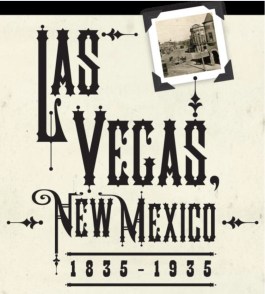
“How can the Friends (of the City of Las Vegas Museum) help to get this important resource more accessible to the public?” That was the question board members considered when they discovered the museum had many archived historical photos in its possession, mostly in storage. The journey to create a photo book to achieve that goal began in 2009. Board chair Bob Mishler said the expectation is that Las Vegas, New Mexico ­– 1835-1935, sponsored by the Friends of the City of Las Vegas Museum, will be printed by April 2018. A discussion on exact price of the book – expected to be between $39.95 and $44.95 – is underway, and will be announced soon.

Mishler credits author/editor Edwina P. Romero (Patti), and dynamic interaction with selected members of the subcommittee, with the book’s evolution into a more interpretative offering of Las Vegas’ first century.  “The various descriptive bits and pieces were woven into a tapestry of people and lifestyles,” he said. “It became more of a social and cultural ethnographic record of the people of early Las Vegas as documented through time.”

Patti RomeroRomero, the author of two historical nonfiction books, is an historian at heart. She worked diligently to assure accuracy and authenticity in Footlights in the Foothills, Amateur Theatre of Las Vegas and Fort Union, New Mexico, 1871-1899, and Cowboy Reunions of Las Vegas, New Mexico. She is currently at work on her first historical novel, Prairie Madness, set at Fort Union and in Las Vegas, while also dedicating the bulk of her time to her role as author-editor of Las Vegas, New Mexico ­– 1835-1935.
Romero’s education includes a BA at California State University Dominguez Hills, an MA at New Mexico Highlands University, and her Ph.D. at the University of New Mexico. She describes herself as a mother, author, former Assistant Professor, former academic administrator, and former horse trainer.

In the following Q&A, she talks about her experiences working on the Las Vegas photo book.

ORP: How did you become involved in the Las Vegas photo book project?
Patti: The early concept for this book came about while I was working at the City of Las Vegas Museum (CLVM). The book sub-committee of the Friends of the City of Las Vegas Museum and Rough Rider Memorial Collection (Friends) met at the CLVM. As an employee, I was aware of the project as one of several museum activities. Then, because I was familiar with the Museum’s photograph collection, I was given the task of searching that collection for images to add to the book.

Several years later, Bob Mishler (Friends chair), contacted me about writing extended historical captions. When I delved into the possibilities of taking on this project, I saw that the task required large-scale organization and editing to determine the best, most accurate way to approach the captions. So I submitted a proposal to do the work.

ORP: What appealed to you about working on this project, which was in development when you took it on?
Patti: First, the photographs themselves grabbed me. My first books, Footlights in the Foothills, Amateur Theatre of Las Vegas and Fort Union, New Mexico, 1871-1899, and Cowboy Reunions of Las Vegas, New Mexico, examine two aspects of Las Vegas history, but these period photographs show the larger context—the bigger picture in which amateur theatre and ranch life had taken place.

The second thing—I have to admit—was the challenge. The project had been in the works for several years, but work on it had been suspended for awhile. I saw great potential in publishing a book using period photos to reveal as much of the fascinating history of Las Vegas as could be contained within the limits of a book.

ORP: What was the driving force behind the project in its early stages? How has that changed, or has it?
Patti: I was not directly involved in the early stages of the project, which involved several people and a Friends book sub-committee. When I got involved, it seemed that the original concept was oriented toward the film industry while telling the history of Las Vegas. During the early stages, fourteen historical essays from several historians as well as narratives and photographs from community members—all solicited by the Friends—had been approved, adding a heavier focus on history.

My driving force, keeping the book sub-committee’s objectives and previous work in mind, was to put the materials into a book that people would want to read, enjoy, and learn from. I proposed to narrow the approach to a specific historical time frame—1835-1935—and a specific location—the communities of Las Vegas. Also, I made showcasing the CLVM’s historical photograph collection a priority, and I suggested adding images and topics for side bars—biographical profiles and short write-ups of events.

ORP: Talk about the photo selection process. I understand that in addition to selecting the photos, research to determine source and attribution was required. What was that like?
Patti: Criteria for selection included aesthetics, time period, relevance to the major topics within the book’s time period, authenticity, and availability. Once images met these criteria, they needed to “pass inspection” by the book designer, in other words: Would the photos reproduce well?

For me, the toughest parts of selection—and de-selection—were determining dates, authenticity, and origins, and securing permission to publish copyrighted images/narratives. Next came matching photos with the ongoing narrative of the people and events in the history of Las Vegas from 1835 to1935. This involved long hours examining notes written on the photos, the data from the repositories about the photos, historical books and narratives, and what the image itself indicated through clothing, vehicles, background buildings, etc. The copyrights for several images were held by individuals, it was often hard to find these people to get their permission. Fortunately, throughout the project, I had the help of staff members and volunteers.

ORP: As the author-editor, what were your priorities when you first became involved?
Patti: I wanted to make this book pop.

When I began work, materials for the book included several hundred photo-copied images (many duplicates) from a variety of repositories and covering many historical periods and geographical locations—in addition to fourteen essays, assorted narratives and notes (authors unidentified), and historical materials from community members.

My priorities began by getting familiar with all this stuff, finding the best way to present it to readers, while at the same time, honoring the known and unknown histories of Las Vegas and making it a “good read.”

ORP: There are historical essays, and of course photo captions. What were the sources of information to flesh out the book’s content?
Patti: The historian-authors’ essays include sources cited or consulted.

Las Vegas Book
New book title page. Edwina P. Romero, author and editor; designer Christian Kenesson (Kenesson Design, Inc.)

For the extended historical captions, sidebars, and introductory materials, I consulted the following: published books and articles, newspaper accounts, the Internet, the notes and essays that were part of the boxes of materials the sub-committee gave me, unpublished works and old histories in the CLVM archives, Donnelly Library, Carnegie Library, and various New Mexico state records data bases. In addition, I talked to people.

ORP: In what ways has the graphic designer (Kenesson Design, Inc.) been helpful in organizing the book’s visual appeal and presentation?
Patti: First, Kristin Kenesson approved for publication the selected images. Sometimes, she added images from her stock that would further enhance the appearance. She designed the layout, color scheme, and various fonts for the type—all beautiful. She often asked good questions about Las Vegas, which sometimes pointed to a need for more detail. And, because of her visual arts background, she provided options for ways to express history, which were both challenging and affirming.

ORP: Although the book was in process when you contracted with the Friends, there was still a vast amount of information in need of organizing or prioritizing. What was most important to you at the outset of your involvement?
Patti: The human side of history. I kept it in mind as I organized, re-organized, selected material and photos—and discarded others. During this part of the process, I constantly reminded myself that the story is about the people of Las Vegas—to whom the book is dedicated.

ORP: What is the most compelling reason for people to buy this book?
Patti: It’s big, beautiful, and readable, and it tells stories of Las Vegas and its people.

ORP: What is the one thing you got out of this experience that will stay with you in your life and writing career?
Patti: This is my “last hurrah!” What will stay with me as I return to fiction-writing are the rewards of personal perseverance and accepting the help of others. I learned to co-ordinate and co-operate with staff, volunteers, a book designer, committee members, sponsors—and interviewers. A writer does not always write alone.

Photo Credit Romero: David P. Pascale


Please Follow, Like, Comment and Share this post. Your feedback is important to me. Thanks for reading One Roof Publishing Magazine. The publisher may be reached by e-mail at fsharon@msn.com. Image of book cover used by permission Friends of the Las Vegas City Museum


Little Thoughts

A new day


Little thoughts?
You think you aught
Not speak your dreams?
Yet from your heart hope streams and screams.

Make your choice,
Raise your voice!
Speak those words of deepest valor,
Yes, believe! You have the power.

No little thoughts, your heart’s desire,
Your’s a life full of hope and fire.
Clearly define your fresh new way,
May tomorrow be your perfect day.


Please Follow, Like, Comment and Share this poem. Your feedback is important to me. Thanks for reading One Roof Publishing Magazine. One Roof Publishing may be reached by e-mail at fsharon@msn.com. Publisher and primary writer, Sharon Vander Meer. Guest posts are welcome.


And the winner is…

Happy 2018

In a recent post I proposed a challenge to readers asking, “What quote or comment – your own or from another source – defined 2017 for you? What do you want 2018 to be like?”

My responses to the challenge are–

What I learned in 2017 is that no matter what happens, forge ahead. Life’s ups and downs are temporary. Live life to the full in the best way you know how.

Mark Twain is my inspiration for 2018: Twenty years from now you will be more disappointed by the things you didn’t do than by the ones you did do. So throw off the bowlines. Sail away from the safe harbor. Catch the trade winds in your sails. Explore. Dream. Discover.

You are never too old to explore, dream, discover.

Below are the responses I received, and the winner of a signed copy of my newest novel (release date Jan. 31) is… everyone who responded! Thanks to each of you for your thoughtful consideration of the questions.

Beth Urech: “Do not do what someone else could do as well as you. Do not say, do not write what someone else could say, could write as well as you. Care for nothing in yourself but what you feel exists nowhere else. And, out of yourself create, impatiently or patiently, the most irreplaceable of beings.” Once again, I’m pinning Andre Gide’s words above my desk!

Karen Topping: For 2017 for me it was this, “Let what you love be what you do,” and my inspiration for 2018 is, “Do not be dismayed by the brokenness of the world. All things break. And all things can be mended. Not with time, as they say, but with intention. So go. Love intentionally, extravagantly, unconditionally. The broken world waits in darkness for the light that is you.” – L.R.Knost (Taken from an Instagram post). I also like a very simple one for 2018. “Be Good, Trust God, Enjoy!” – taken from Guideposts article on how to live life and face death.

Kathleen Rodgers: In 2017 I experienced grace, mercy, hope, forgiveness, healing, and restoration. For 2018, I will once again seek peace and try to be empathetic to others who may be suffering.

Niki Sebastian: For 2017, it was mostly a “been here, done this before, didn’t think I would have to do it all again” year on the social level, and a learning how to shut out the ugly hysteria engendered so I could continue personal growth. 2018 looks like being mote of the latter, gratitude for what is in my personal life that I will defend from assault by the ugly social havoc, as best I can.

Andrea Gottschalk: My ending of 2017 is realizing the things that define, imprinted and limited me and prevented me to expand myself into greater joy and fulfillment of life itself. My favorite quote ever out of a movie called “Dan in real life” (which is also one of my favorite movies ever) is:  “Plan to get surprised!” I used that quote for the last few years as a New Years resolution!

Steve Leger: I play music because it makes me a better person.

I hope all the winners enjoy reading “Blind Curve,” which you will receive as soon as I can get it to you after publication. My wish for each of you – and all One Roof Publishing readers – in 2018, is fulfillment of your dreams and the satisfaction that comes from your creative spirit, whatever form that may take.


Please Follow, Like, Comment and Share this article. Your feedback is important to me. Thanks for reading One Roof Publishing Magazine. One Roof Publishing may be reached by e-mail at fsharon@msn.com. Publisher and primary writer, Sharon Vander Meer. Guest posts are welcome.


Historical photo book arriving soon

It has been years in the making, but the book of historical Las Vegas photos, sponsored by the Friends of the City of Las Vegas Museum, is in the final stage of approval for publication. This has been a long process and a costly one, but the Friends had a worthy goal in mind and set forth with determination. The following is a reprint, used with permission, of the a Friends’ article from the winter issue of the organization’s newsletter, which outlines the journey. My brief review of a draft copy of the book tells me Las Vegas, New Mexico, 1835-1935 lives up to expectations.

The first printing will be for 2,500 copies at the cost of about $20,000. The books is a “coffee table” style book in terms of size, and contains many photos and a whole lot of history. If you would like to be part of this exciting effort, you may become a member of the Friends of the Museum at the Sponsor level for $100, and receive a copy of the book once it is published.

From the Friends newsletter, winter issue…

Las Vegas Book
New book title page. Edwina P. Romero, author and editor; designer Christian Kenesson (Kenesson Design, Inc.)

In the fall of 2009 the Friends of the Museum Board accepted the challenge of making public the large collection of photograph images archived in the city museum. It was agreed that a book was the appropriate format and a book subcommittee was established with Margaret Vazquez Geffroy, Kenneth Mares, Ginny Gable, Jay Harris, Linda Gegick, Nancy Colalillo, Kayt Peck and Elmo Baca as early book author.

The charge sent to the subcommittee the following December stated: The Subcommittee on the Las Vegas Photohistory Book Project shall formulate policy and procedures for the publication of a new photohistory book of Las Vegas, NM, a book that shall include a significant number of photographic images in the City of Las Vegas Museum collection and other photographic images, if needed. 

Fourteen book themes were identified by the subcommittee and offered to selected local experts requesting historical essays on the given theme. In addition, the Friends sent out a request to the public for submissions of personal historical writings, photographs, Spanish language documents, and literary memorabilia related to the themes established. Later, a request for proposals for a book designer was publicized, and Kenesson Design, Inc. of Albuquerque was selected.

Because this process evolved over several years, subcommittee members changed and the author changed. New life was breathed into the project when Edwina P. Romero was contracted to serve as book editor/ author. Subsequently, the book was reevaluated, and changes in its structure, content, and focus were adopted.

The book, in its final round of copy editing, includes about 200 images with extended historical captions, connective narrative text, essays, sidebars, and a timeline of major events. Following are some excerpts.

– March 28, 1835—Juan de Dios Maese, Manuel Archuleta, Manuel Durán, and José Antonio Casados, of San Miguel del Bado, on behalf of themselves and 25 additional men, petition the town council for the land known as Las Vegas Grandes en el Río de las Gallinas [The Large Meadows at the Gallinas River].
– 1840 Plaza de Arriba, later known as Upper Town and San Antonio, becomes the second community on the land grant settlement.
1846 August 9—Captain Cooke leading an advance party of the Army of the West reaches the Nuestra Señora settlement. Cooke meets with Alcalde Juan de Dios Maese.
1852 January 9—San Miguel County is established by act of New Mexico Territorial legislature.
1860 New Mexico Territorial Legislature passes a bill making public education compulsory. Teachers receive fifty cents per pupil per month.
1879 September—Monte Verde, (alias Monte Holman, alias Dame Belle Siddons, a Confederate spy) arrives and sets up as a dealer of faro and monte (card games) at the Toe Jam Saloon on Center Street (later Lincoln Avenue). She departs before year end.
1880 In one decade (1870–80), population increases from 1,730 to 4,697. The Agua Pura Company is formed and provides water for homes and fire hydrants.
1881 March—Shakespeare Society is established.
– 1882 July—east and west sides of the Gallinas River incorporate as one municipality.
– 1888 Christian Brothers’ De La Salle Institute, a private Catholic school for boys, opens.
1895 November 25—East of Shoemaker, NM, AT&SF Train # 4 collides with #35. Three railway workers killed. “In those days we never got any train running orders. We ran exclusively by smoke and headlight,” said one engineer.
1897 United States Supreme Court rules that Las Vegas common lands of the Las Vegas Land Grant belong to the community known as the Town of Las Vegas, which as yet does not exist.
1904 First automobiles appear …
1913 Obaid Maloof builds the Mutual (later Campus, later Kiva) Theater for movies.
1916 New Las Vegans elected: Ezekiel C. de Baca elected governor and A. A. Jones, U. S. Senator.
1920 Penney Dry Goods and Ilfeld Hardware stores move to the City of Las Vegas (east of Gallinas River).
1922 Kiwanis Club organizes local chapter.
– 1923 New Mexico Normal University crisis, president dismissed.
1924–25—Las Vegas Maroon baseball team wins state championship.
1928 Charles Lindbergh visits Las Vegas.
1932 the City rejects the Town’s consolidation proposal.
1935 March—Cornerstone for new building at New Mexico Normal University is laid, made possible by the Federal Works Progress Administration. Designed by John Gaw Meem, Rodgers Hall would house the University library.


Please Follow, Like, Comment and Share this post. Your feedback is important to me. Thanks for reading One Roof Publishing.

The treasure

Lay not up for yourselves treasures upon earth, where moth and rust doth corrupt, and where thieves break through and steal, but lay up for yourselves treasures in heaven, where neither moth nor rust doth corrupt, and where thieves do not break through nor steal, for where your treasure is, there will your heart be also. Matthew 6:19–21

cropped-yellow-red.jpg


There is only one treasure worth having.
It is not out of reach.
It grows every day, not by what we get,
but by what we give.
Generosity is immeasurable.
A little kindness has the same value
as a great gesture.
The widow’s mite was as good
as the rich man’s plenty.
Gifts given in earnest
and without thought of recognition
or fanfare
have the same value
as the check for one million written by a rich man.
The treasure we have on earth matters not one whit;
it is what we do with our lives that make the difference
in the here and now,
and in the hereafter.


_____________________________________
Like, share and comment. Your feed back is important. Thanks for reading One Roof Publishing.

American Gold Star Mothers

Providing services to vets and their families

Becky Christmas
Becky Christmas

Becky Christmas, a Wagon Mound, N.M. woman, has been actively involved in American Gold Star Mothers Inc., for many years. Following the death of her son, Capt. Todd Tyler Christmas who died while serving in the military, she wanted to affiliate with an organization in which she could serve others and honor her son. Christmas has served on the national board of American Gold Star Mothers and will soon step up to the role of president. Below she responds to questions about the organization.

By presidential proclamation, the last Sunday in September each year is designated as Gold Star Mother’s Day, but the proclamation is more than a recognition of selfless women who devote their time and energy to support soldiers, families of deceased veterans, and each other; GSM recognizes the impact mothers have had in shaping who we are as a country and the value of patriotism to sustain hope. The proclamation, written in 1936, is printed at the end of this Q&A.

ORP: Becky, talk about how American Gold Star Mothers has effected your life.
Becky: American Gold Star Mothers made a huge impact on my life when I first met other GSM members in New Mexico. Some were Mothers from the Vietnam era. They showed me they had lived full lives and had also continued the mission that their child could not, by helping others. I was not looking for a grief organization and that is not what we are. I began to feel that I could make a difference in veterans’ lives and other families of the fallen, once I met other Gold Star Mothers. It has changed my life a great deal and helped me step out of my comfort zone to help others.

ORP: What would you like people to know about the organization they may not know?
Becky: American Gold Star Mothers, Inc. is a service organization. We are the first Veterans Service Organization-VSO. Our number is 001. Not all Gold Star Mothers join AGSM. It is similar to the American Legion or VFW. Not all veterans choose to join those. We began in 1928.

Laying of the wreath
On Nov. 11, 2017, the 35th Anniversary of The Wall was observed. Laying the wreath for the American Gold Star Mothers were Mary Byers, Past National President from Tennessee and Becky Christmas, 1st National Vice President, New Mexico. At their side is Kate O’Hare-Palmer, U.S. Army Nurse Corps, Vietnam, who spoke during the ceremonies.

ORP: What was the genesis of American Gold Star Mothers?
Becky: When the United States entered World War I in 1917, American George Vaughn Seibold, 23, ended up serving in the British Royal Flying Corps. He corresponded with his family regularly. His mother, Grace Darling Seibold, was inspired to do community service by visiting returning servicemen in hospitals. When mail from George stopped, the family was unable to learn what happened to him. Grace continued to visit hospitalized veterans in the Washington area, clinging to the hope that her son might have been injured and returned to the United States without any identification. While working through this time, she helped ease the pain of the many servicemen who returned so war-damaged they were incapable of reaching normalcy. On Oct. 11, 1918, George’s wife in Chicago received a box marked Effects of Deceased Officer 1st Lt. George Vaughn Seibold. The Seibolds also received a confirmation of George’s death on Nov. 4, through a family member in Paris. George’s body was never identified.

Thereafter, Grace devoted her time and efforts to working in hospitals and extending the hand of friendship to other mothers whose sons had lost their lives in military service. She organized a group of these special mothers, with the purpose of comforting each other and giving loving care to hospitalized veterans confined in government hospitals far from home. The organization was named for the Gold Star families hung in their windows in honor of the deceased veteran. After years of planning, on June 4, 1928, twenty-five mothers met in Washington, DC to establish the national organization, American Gold Star Mothers, Inc. We began with a few mothers from WWI in the DC area who wanted to turn their grief into something positive and it continued to grow. There have been many years when the membership was in the many thousands. Now we have around 1,000 members.

ORP: Why do women join this volunteer organization?
Becky: Most women join to give back, to continue the mission their child cannot. They want their child remembered but they also want to support their child’s friends who came home. They want to make a difference in the lives of veterans.

ORP: Not all mothers of deceased veterans choose to be a part of the organization. What do you think holds them back?
Becky: I think some women only want a grief organization; some think they will have to go to meetings all the time; some think they will have to volunteer at hospitals all the time. There are many reasons. Some do not see that they can help and make a difference.

ORP: Gold Star Mothers is a national organization with chapters across the country. How does one become affiliated with a chapter if there isn’t one in the town where you live?
Becky: Most states only have one or two chapters in their state. In New Mexico, for example, we only have one chapter. It is located in the central part of the state. We have members all across the state. Many cannot attend a meeting in person but they can attend events in their area and volunteer in their area. Each new member is assigned a chapter and department by the National Service Officer. Our New Mexico chapter tries to have a conference call meeting, every other month, and of course email is a great way to communicate. We try to have our members attend and volunteer in their areas.

ORP: Is there a cost to join and what is the money used for?
Becky: The cost for National membership is $30/year. Those dues cover the cost of putting out the newsletter six times a year and helps maintain our headquarters in Washington, D.C. Chapters and departments also may have dues. Most are only $5.

ORP: What types of volunteer work do Gold Star Mothers do?
Becky: AGSM members volunteer as representatives at a VA hospital or clinic. We try to have a representative for each state. We also have a deputy representative. We can also volunteer at a VA Center, Wreaths Across America, help in Fisher Houses, memorial parks and cemeteries, donate items at the VA hospitals, volunteer and donate at veteran nursing homes and any veteran event. We help with Stand Down for Homeless Veterans, Horses For Heroes, Paws and Stripes, memorial walks and runs and numerous other activities. We raise money that goes to veterans. The main focus this year is suicide awareness.

ORP: In what way is the organization affiliated with veterans’ organizations?
Becky: Many of our mothers are American Legion Auxiliary members and we are a Veterans Service Organization under the Department of Veteran’s Services.

ORP: What is the significance of wearing white?
Becky: Wearing white is a time-honored tradition of the American Gold Star Mothers, Inc. While black is a traditional color of mourning, the decision to wear white, rather than black, denotes the celebration of our children’s goodness, innocence and sacrifice. President Wilson also asked the GSM to wear white with a black armband, with a gold star, as the nation had endured so many deaths and it was mourning, but by wearing white, they could show there may be light ahead. The Gold Star Mothers are easily recognized at events because of their attire. Also, the Gold Star wives, wear a gold jacket and the Blue Star Mothers wear navy blue attire.

ORP: What challenges does the organization face as it looks to the future?
Becky: One of the biggest challenges now, is that a great majority of membership applications are from mothers whose child committed suicide. Sometimes the family does not have a document that states that the suicide was a result of service or many times the stigma of seeking help for Post Traumatic Stress Disorder or Traumatic Brain Injury, prevents the servicemen and women from seeking help, especially at the VA. For a parent, the tragedy of a suicide means they will always seek the reason why. By the VA and military recognizing the results of combat and multiple deployments, we can help these families.

GSM event
For several days leading up to Veteran’s Day, reading of the names on The Wall took place around the clock. These Gold Star Mothers are pictured right before they read names. Front row, Sarah Taylor, National Banner Guard, Mary Byers, Past National President, Carol Resh, Flag Bearer, Jo Ann Maitland, National Service Officer. Back row Sue Pollard, National President, Mona Gunn, National 2nd Vice President and Becky Christmas, National 1st Vice President.

ORP: As the incoming president, what are your hopes and goals for the organization?
Becky: My hope is to reach out to all Gold Star Mothers and to continue the mission that was started this year of Military Suicide Awareness and Prevention. I also want our membership to be aware of legislation that affects our veterans, military and the survivors. I hope to continue the principles of Americanism, patriotism and service. I also want every American to remember the fallen and the sacrifice that service to our country takes.

We are mothers who come from all over the United States. A tragedy has brought us together but I have truly been blessed by these strong and sincere Gold Star Mothers. We help each other while we are helping our veterans.

For more information about American Gold Star Mothers call 202-265-0991, or email agsmnso@gmail.com.

PROCLAMATION – GOLD STAR MOTHERS

“Whereas the service rendered the United States by the American mother is the greatest source of the Country’s strength and inspiration; and “Whereas we honor ourselves and the mothers of America when we revere and give emphasis to the home as the fountainhead of the State; and

“Whereas the American mother is doing so much for the home and for the moral and spiritual uplift of the people of the United States and hence so much for good government and humanity; and

“Whereas the American Gold Star Mothers suffered the supreme sacrifice of motherhood in the loss of their sons and daughters in World Wars” and

“Whereas the said Public Resolution 12 provides: “That the President of the United States is hereby authorized and requested to issue a proclamation calling upon the Government officials to display the United States flag on all Government buildings, and the people of the United States to display the flag and to hold appropriate meetings in their homes, churches, or other suitable places, on the last Sunday in September, as public expression of the love, sorrow and reverence of the people of the United States for the American Gold Star Mothers.”

“Sec. 2. That the last Sunday in September shall hereafter be designated and known as “Gold Star Mother’s Day,” and it shall be the duty of the President to request its observance as provided for in this resolution.”

________________________
Photos Courtesy of Becky Christmas

Scholarships for women through P.E.O.

Jumping for joy

P.E.O. Chapter H Cottey College chair, Ruth Mares, announced recently that the school, located in Nevada, Mo., has risen in the 2018 U.S. News and World Report ranking of Best Regional Colleges. “We were notified the school we support ranked seventh, up from twenty-third last year. The school also ranked second for best value and third for proportion of international students,” Mares said.

“Not many people know about Cottey. It’s a small women’s college founded by our organization in 1884. The school’s 2017 enrollment was 288. One of those students was Christina Litherland who graduated last spring with a degree in English with an Emphasis in Women Writers and two minors: Writing Studies and Women, Gender and Sexuality Studies. She is now attending New Mexico Highlands University for her master’s degree in English with an Emphasis in Linguistics, Literacy, and Composition.

P.E.O., a philanthropic educational organization founded in 1869, has two local chapters, which contribute to Cottey, and to funding projects for women at the national and state level.

“Both local P.E.O. chapters have sponsored women for scholarships through the years, and been able to collectively award thousands of dollars to qualifying recipients. Our goal this year is to promote the projects more actively so more women may take advantage of the opportunity this funding affords,” Mares said.

Recipients of scholarships are not required to attend Cottey. “They may attend any school of their choice. Scholarships are competitive and awarded based on criteria outlined on the international and state websites,” Mares said. “Each year we contact counselors at the high schools to keep them informed about what is available. This year we plan to contact financial aid offices at Highlands and Luna Community College as we have scholarships available for nontraditional and international students as well.”

P.E.O. has provided more than $304 million in financial assistance to more than 102,000 recipients through the Educational Loan Fund, International Peace Scholarship, Program for Continuing Education, Scholar Award and STAR projects.

For more information about P.E.O. scholarships go to www.nmpeo.org. Locally contact Chapter H at fsharon@msn.com, or Chapter AC at rayjoyl1957@gmail.com.
_____________________
Image: P.E.O. website