…seeing the world through her eyes

Photography is one thing; taking images to another level requires ingenuity and originality. Technique plays a part, but only when applied by an expert hand and a discerning eye. Elaine Querry is that kind of photographer. She has been working in this art form for more than 35 years and has won numerous awards. Elaine’s work has been shown in locations around the world and is in many public and private collections. As a fine art photographer she captures images that speak to her as an artist and challenge her creatively. Her work is on exhibit through September at 2 Ten A Galaria of Art and Treasures, 210 Plaza, Las Vegas, N.M., along with the work of sculptor Duke Sundt and artist David Carter. The Galaria is open from 10 a.m. – 5 p.m., Monday – Saturday. Elaine and her husband Ron Querry live in historic Las Vegas, N.M. in a century old Victorian home.
ORP: There was a great turn out for the opening of Out West at 2 Ten A Galleria of Art and Treasures. Talk briefly about the show and the participants.
Elaine: Linda and Bill Anderle have brought together a group of people working in a variety of media to illustrate the theme Out West. Duke Sundt is showing a selection of his incredible bronzes; I have a collection of color photographs from in and around Las Vegas; Texas photographer David Carter has images of rodeos that he’s worked on in and out of Photoshop. Also showing are artists – Stuart Gelzer (photographs) and Alice Winston Carney (watercolors).
ORP: Everyone with a cell phone believes they’re the next Ansel Adams. What makes a fine art photographer different from the casual picture taker.
Elaine: A cell phone, a digital or film camera are all just tools. What makes a fine art photographer is someone who attempts to take the viewer there. To present the image in such a way as to provoke a visual dialogue with the audience. When I photograph I’m looking to tell a story. To stop a moment in time and place and to record it as I found it. Photography is a wonderful way of remembering and expressing the world around us. Fine art photography goes deeper. It’s as much about the photographer as it is about what she is recording. Photography becomes not only a tool but an extension of who we are, framed by our experiences and our visions, our hearts and our souls. As a fine art photographer, I think in terms of series whether all at one shooting or later bringing together images that build on each other and work together. The series I am showing now at 2 Ten are images I shot for my enjoyment and interest over a period of five years with no expectation of a resulting show. I’m driven to photograph. When I can put together a series, it’s very satisfying.

ORP: What drew you to photography as an art form?
Elaine: Early on with photography I found a way of expression that didn’t need words. One where I could communicate and express myself visually. I am an artist and photography is my art form.
ORP: I’m a fan of photojournalism because I do believe a picture speaks a thousand words. What “story” do you look for when you take photographs?
Elaine: I began my career as a photojournalist and I was also chief photographer for three newspapers. I shot, printed and developed my editorial and advertising work as well as that of others at the papers. I learned from some very good editors that you must tell a story with your photographs. You need to shoot from different angles and levels to find that right image and to bracket your exposures… you need to stretch yourself, to take chances. It’s important for me not put myself in the image – I want to show you what’s there so you can see it and form your own ideas, your own insights. And I compose the image in the viewfinder – shooting full frame. Rarely do I crop an image. Dorthea Lange said, “The camera is an instrument that teaches people to see without a camera…”
ORP: Your www.elainequerry.com website is called Shadowcatcher. What does that mean to you and how does the term reflect your work?
Elaine: Shadowcatcher is another term for a photographer. Someone who catches shadows. I first heard that term as it was used to describe Edward Sheriff Curtis (1868–1952), the early and great photographer and ethnologist whose work focused on the American West and its Native peoples. His subjects called him Shadowcatcher because he photographed them and made a print which “caught shadows”. I use that name instead of, and along with, photographer. It’s a beautiful and accurate way to describe what I do.
ORP: What is the most difficult aspect of what you do and why is it difficult?
Elaine: It’s all difficult. As it should be. There’s that old thing about people thinking – and actually saying – that if they’d been there with a good camera they could have taken that picture. That’s like saying if they’d had a good pan, they could have made that gourmet meal. I love what I do, but the most difficult aspect for me is to focus on one thing. And I want to do that one thing to the best of my ability. Every project seems to take so much time!
ORP: Is being a fine art photographer more manageable with all the technology available?
Elaine: It has made things much different. The works of so many of the masters of photography were here long before our current technology was created and those works are still exquisite. Digital technology has given us additional tools and that has opened up other worlds, other ways of expressing our vision. For example I work a great deal with old photographs that I’ve tried to restore using traditional photography with varying levels of success. But once introduced to digital technology, I’ve had much more success in getting those images close to the originals.
ORP: Do you still use film or do you rely on digital?
Elaine: I rely on digital but have not given up my film cameras or wet darkroom. I rely a great deal on the images I have taken on film over the years before I went digital and I rely a great deal on my digital images. I’d like to incorporate the two more. And I like to do alternative process photography as well, and photograms, which one makes without using a camera at all. I have licensed a number of my alternative process images for use as book jacket covers in this country and in Europe.
ORP: What do you most want people to know about you as an artist and photographer?
Elaine: I want to show you what I see – to show you what is there. To show you something you may not see or be aware of on your own. To open your eyes to something new. To make you look.
ORP: Please add anything that is important to you that I left out.
Elaine: For the past three years I’ve been scanning old Cowboy Reunion and other panoramas as well as various other vintage photographs and restoring the scans and then printing the resulting image. It takes a lot of time in front of a computer using Photoshop, but I find it’s been very rewarding. It’s a quiet sort of communion with the people and the time (1915-1940s) in the photographs. For me it’s almost like a meditation of an era gone by. In the panoramas the face might be just a quarter of an inch high but on the computer I can blow it up three or four hundred times to repair the file. Lots of information and lots of things to see and think about! I have a dozen of the early Las Vegas Cowboy’s Reunion Panoramas on display and for sale at the Plaza Hotel.
_________________________
Photos: Linda Anderle


 At the local nursing home I learned – all over again – the power of a smile. As a Deacon in my church I know the value of approaching life in general, and troubled souls specifically, with kindness in your heart and mind. When that kindness is expressed with a smile, it creates common ground. Nowhere is this more evident that when you smile at elders in a nursing home and say hello. The transformation is amazing. Faces pulled down by the weight of being alone, or old, or by the never-never land of dementia, light up like candles in a dark room. Is it because for a moment the individual feels validated, real and present, acknowledged by someone who took time to smile and perhaps say a word of greeting? Or maybe she sees in that smile a vision of herself as she was, and still is. Behind the façade of age or mental illness or physical limitations, he sees that someone cares.

 Promoting the community can sometimes feel like a thankless job. It requires hard work, a sweeping understanding of the area, discerning what makes the area appealing locally and to visitors, and an ability to connect with readers and viewers in interesting ways. Jim Terr continues to be a light in the tunnel that leads folks to visit – and helps those who live here appreciate – the sweetest little town around. He does it in creative and often quirky ways, always positive and lighthearted. What you may not know about Jim is how very talented and creative he is. He has produced countless YouTube videos that highlight Las Vegas positives, and many that celebrate life. He is a satirist with a liberal bent, a song writer, and a tongue-in-cheek commentator on the fractured political landscape. This Q&A is about his consistent dedication to promoting Las Vegas, the original.

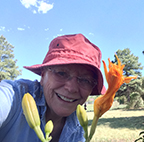 d a year. I’m not kidding, I did. Most of last year I said I was 72. A couple of weeks ago, Bob corrected me (isn’t that what husbands are for?). This is the second time I’ve done this. When I turned 57, I said I was 58, so right up until my 58th birthday, at which point I found out I’d been 57 working toward 58, I was older and younger at the same time. Anyway, the point is in two days I will be 72. I’ve left 71 in the dust, but that’s okay because I never knew I was 71. Now that I’m going to be 72 I’m okay with it, after all I’ve been living with it for a year already.
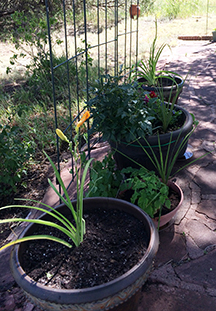 The lilies were a wonderful surprise, but the biggest surprise was the three – yes THREE – birthday cards that accompanied the plants. I can’t begin to explain those cards except that every one of them contained an inside joke. I laughed so hard my stomach hurt!
 Allie Edwards went to the mall. She didn’t know why. It’s not like she had money to spend. She couldn’t even pay her rent, much less buy something she didn’t need that would, in the end, make her feel guilty as hell.
 Why does today have to hurt so much? Don’t say you’ve never been there. We all have days we don’t think we’ll make it through breakfast much less through the rest of the day. To deny our hurt, loneliness, pain, isolation, anger, discontent or whatever name you put to your well of sadness or sorrow, you can’t help but feel alone in the pit. No one understands. How can they? Your pain is your own. No one else can bear it. When that is the pit you are in, tell God, because you are right in this, no one else understands, possibly because in your pain you can’t articulate what you feel, nor do you have faith anyone will listen. God will. He won’t argue with you. Tell you everything is going to be okay. Offer empty platitudes. He will just listen, even if you shout and tell Him your mess is His fault. He listens. Yea, though I walk through the shadow of death (hurt, loneliness, pain, isolation, anger, discontent*) thou art with me, thy rod and thy staff they comfort me. (Psalm 23:4) God is present. Enter into his protection. Vent your pain. He always listens. When you listen closely, He may lead you to those who will hear you, to those whose life commitment is to give you a sounding board. Help doesn’t end with God; it begins with God.
 Sharon Vander Meer