Making a life with photography
According to Sharon Stewart’s website bio, photography is in her genes. Her Great Great Aunt Sadie, Quaker, was a commercial photographer in 1880s Iowa, having a studio with another Quaker woman. Stewart says the impetus of her photographic work is service and beauty. Her Agua y Fe: Water and Faith series is on exhibit through Labor Day at the Plaza Hotel’s Ballroom Corridor Gallery in sponsorship with the Las Vegas Arts Council.
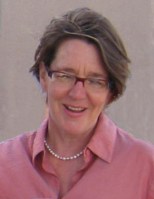
ORP: What brought you from urban living to a more rural lifestyle?
Sharon: My birthplace on the frontera of southernmost Texas with Mexico was imbued with agrarian expanses and fecundity, a languid pace of living, and small town familiarities. I studied finance and economics at the University of Texas, Austin and moved to Houston to begin my photographic career. This served well, though I longed to dwell back with the cycles of nature whose elemental forces resonated with me rather than the densities of the city. Looking for a home in the Mora Valley was a five year endeavor, and yes, finally finding a place in Chacón, the shift from living with three million to three hundred (people) was swift and welcome.
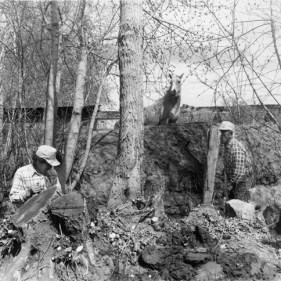
ORP: Your website bio refers to your photographic purpose. Talk about that and how it has shaped your work.
Sharon: Having completed a photo narrative on grassroots environmental activism in Texas, which gave voice to the concerns of salt of the earth folks protecting their land, air, water, culture from the ill effects of industry and the government’s hazardous waste practices, I was a bit discouraged by the realities of what we do to one another in the name of profit. When I moved here, I took a long look at why I was photographing, and ultimately, the answer was to serve history, this coming from strong service ethos that runs in the Stewart family line. Certainly the Toxic Tour of Texas was an activist/advocacy piece with the photographs being used in legislative testimony, published in the daily and environmental press, exhibited in libraries, shopping centers, and museums throughout Texas. Turning to a quieter life, photographing the rituals and traditions of Hispano New Mexico and the acequia culture in El Cerrito continued in the vein offering a view into lives aligned with the land and community. I had begun the El Agua es la Vida project three years before moving to Northern New Mexico, and it expanded with the exploration of the village life over the course of two decades, something I term Slow Photography, a commitment to the narrative through time. These photographs are part of the Water in the West Project and Archive residing at the Center for Creative Photography at the University of Arizona. The Mora Valley narrative, Exit West: A Cultural Confluence, began upon my arrival and will continue through my life here. A major focus has been to place these images in archives and special collections at universities in the American West for scholarly research and teaching purposes.
ORP: How has your purpose evolved from when you started?
Sharon: Initially I was recording the world as I encountered it. I have come to understand that what we see, observe, perceive is an aperture into the self, as tightly or as widely as we are willing to explore and share. Image creation can be a journey into self hand-in-hand with the human instinct to remember, gather, share, enjoin, act. So as I have come to see it, my “purpose“ has been finessed or perhaps honed over these many years of engaged seeing.

ORP: How did you get from being an aspiring photographer to actually doing it for a living?
Sharon: As for many in rural Northern New Mexico, making a living is a mosaic endeavor. I often say I make a life photographing.
ORP: When do you know you’ve captured the subjects of your photographs in just the way you want?
Sharon: Photographing is intuitive for me. Certainly intentionality and placing oneself in the image field is vital. Much of the joy in photographing is opening oneself to the unknown, being free in the not knowing and releasing the imposition of will or expectation on a situation. However, the narrative structure necessitates an understanding of relationships, economic and societal influences, cultural, religious and familial overlays, so I have drawn on my university training to scope an encompassing view of a chosen subject. There is also a calming resonance I feel when all the elements align for a signal image.
ORP: The Stewart photographs I’ve seen are primarily in black and white. Is that your preferred mode of expression and if so, why?
Sharon: My initial work was in color transparency, though with too much noxious chemical exposure in the Cibachrome color printing process, I moved to black and white. However, each subject has an appropriate expression through process, which determines my choice of using color or black and white, film or pixel.
ORP: Talk about the photographers who influenced you and how their work contributed to your photographic and career choices.
Sharon: Early on I studied the Dadaists and Surrealists and their alignment with chance, unexpected juxtaposition, and dream exploration—Man Ray, Merét Oppenheim, Hannah Höch, Marcel Duchamp, and by extension, Alexander Calder and his playful lyricism. In the black and white canon, Minor White for metaphor, spirituality and beauty, Edward Steichen for experimentation, Paul Strand for clear-eyed, compassionate observance and commitment to a finely crafted negative and print, Laura Gilpin for evocative landscapes, Dorothea Lange for social and economic justice. Their creative expression is synchronistic with ways I perceive the world, so I look to them as both partners and guides.
ORP: Realizing that each image has its own unique message, what do you want your photographs to convey?
Sharon: My intention is to open in viewers understanding and discovery by stimulating their imaginations and memories.
ORP: If you could use only one word to describe your photography, what would it be?
Sharon: Whenever I have been asked about a favorite anything, I respond that I have many favorites for as many different reasons. Same applies to my photographic expression. If you look at the bodies of work in the arc of my creative life, you will see work originating in the personal, the universal, the communal.
ORP: What motivates you to continue taking pictures?
Sharon: I cannot not take photographs, though I become more selective about when and where and what I photograph. Photography has taught me to see, not just look, see, and those observations aren’t always tangibly recorded.
ORP: Where have you exhibited and do you have current shows up locally?
Sharon: The cultural landscape images of Northern New Mexico, many of which are currently on view in the Agua y Fe: Water and Faith exhibition at the Plaza Hotel’s Ballroom Corridor Gallery in sponsorship with the Las Vegas Arts Council, have been exhibited at the New Mexico Museum of Art, NM History Museum, Office of the State Historian, Center for Creative Photography, Museum of Fine Arts-Houston, NM Capitol Arts Collection, Visual Studies Workshop, Houston Center for Photography, FotoFest International Biennial. Other work has been exhibited in Amsterdam, Belgium, Germany, South Africa, Cuba, Canada, New York City, Los Angeles, Boston, Washington, D.C.
Learn more about Sharon Stewart and view her online galleries at www.sharonstewartphotography.net
____________________
Photographs: Sharon Stewart, used by permission


 At the local nursing home I learned – all over again – the power of a smile. As a Deacon in my church I know the value of approaching life in general, and troubled souls specifically, with kindness in your heart and mind. When that kindness is expressed with a smile, it creates common ground. Nowhere is this more evident that when you smile at elders in a nursing home and say hello. The transformation is amazing. Faces pulled down by the weight of being alone, or old, or by the never-never land of dementia, light up like candles in a dark room. Is it because for a moment the individual feels validated, real and present, acknowledged by someone who took time to smile and perhaps say a word of greeting? Or maybe she sees in that smile a vision of herself as she was, and still is. Behind the façade of age or mental illness or physical limitations, he sees that someone cares.

 Promoting the community can sometimes feel like a thankless job. It requires hard work, a sweeping understanding of the area, discerning what makes the area appealing locally and to visitors, and an ability to connect with readers and viewers in interesting ways. Jim Terr continues to be a light in the tunnel that leads folks to visit – and helps those who live here appreciate – the sweetest little town around. He does it in creative and often quirky ways, always positive and lighthearted. What you may not know about Jim is how very talented and creative he is. He has produced countless YouTube videos that highlight Las Vegas positives, and many that celebrate life. He is a satirist with a liberal bent, a song writer, and a tongue-in-cheek commentator on the fractured political landscape. This Q&A is about his consistent dedication to promoting Las Vegas, the original.

 d a year. I’m not kidding, I did. Most of last year I said I was 72. A couple of weeks ago, Bob corrected me (isn’t that what husbands are for?). This is the second time I’ve done this. When I turned 57, I said I was 58, so right up until my 58th birthday, at which point I found out I’d been 57 working toward 58, I was older and younger at the same time. Anyway, the point is in two days I will be 72. I’ve left 71 in the dust, but that’s okay because I never knew I was 71. Now that I’m going to be 72 I’m okay with it, after all I’ve been living with it for a year already.
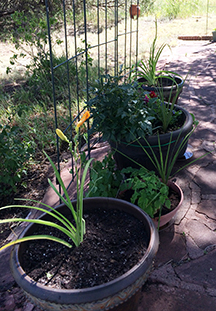 The lilies were a wonderful surprise, but the biggest surprise was the three – yes THREE – birthday cards that accompanied the plants. I can’t begin to explain those cards except that every one of them contained an inside joke. I laughed so hard my stomach hurt!
 Allie Edwards went to the mall. She didn’t know why. It’s not like she had money to spend. She couldn’t even pay her rent, much less buy something she didn’t need that would, in the end, make her feel guilty as hell.

