Q&A With Lisa Ellison: Paying it Forward

Lisa Ellison headshot-1Q. In one sentence who is Lisa Cooper Ellison?
A. I’m a person who believes in the power of stories and the importance of helping others.

Q. Your bio says you come from a family where everything is communicated through a narrative arc. Talk about what that has meant to you as you make career choices.
A. I come from a family with a strong oral story telling tradition. We spent a lot of time telling tales during Sunday dinners at my grandmother’s house.  I was particularly fascinated by her ability to bring stories to life through voices, pauses, and unusual vivid descriptions.

I don’t know when I fell in love with writing, but I have many memories of sitting on my bed as a teenager composing poems or short stories. I studied creative writing while getting my bachelor’s in English, but chose to pursue jobs in the helping professions because it seemed more secure. I continued to write and read in my spare time. When I contracted Lyme disease and had to slow down, I reflected on how quickly life changes and the importance of following your passions. Deep down, I knew that writing would heal me. And, it did.

Q. I was drawn to your work by the article you wrote about your brother. It was moving, painful, and real. Talk about where you had to go inside yourself to write that article.
A. I felt led to write the article “My brother had mental health issues and committed an awful crime. But I love him,” for The Guardian, because the number of families experiencing similar losses was increasing. I wanted to join the conversation regarding mental health crises in order to help those who grieve difficult losses and to challenge some of the misguided viewpoints regarding the complexities of addressing mental health problems.

Writing the article required me to tap into the intense grief I felt regarding my brother’s death, courage to speak publicly about such a personal event, and compassion for my brother, his victim, my family, and everyone this incident touched.

Q. Your writing and blogs convey a desire to provide hope and help. Talk about why this is important to you as a writer and as one who has had to cope with illness and loss.
A. Throughout my life I’ve experienced some significant struggles, including leaving home at age 17, my brother’s suicide, and contracting chronic Lyme disease. Many people provided assistance and hope at crucial moments. Now,  I try to pay forward the gifts I’ve been given. Writing is an effective tool for transmitting hope.

Q. I am intrigued by your description of the book-length memoir you are working on. Tell briefly the premise of the book and why you were inspired to write it.
A. I contracted a debilitating case of Lyme disease, which was complicated by an MTHFR gene mutation, at age 38, the same age my mother was when she became disabled by a fall at work. She struggles with a variety of complex health conditions including lupus, gastro paresis, and rheumatoid arthritis. Her mother retired at 58 and also struggled with unexplained symptoms and diseases, as did her mother before her. After leaving home I was compulsive about my health and determined not to get sick like them. But then I did. When I found out that part of the problem was in my DNA, I knew it was time to write a book.

This memoir takes place in Elmira, New York, a town devastated by massive flooding during Hurricane Agnes in 1972.  The place never recovered, which makes it an apt setting for a memoir about seeking higher ground. On a microcosmic level, the story is a coming-of-age tale about my life in two households—one with my grandmother who never let me leave the house and one with my mother who had a more free-range approach. On a macrocosmic level, it’s a story about the jobs and opportunities that receded with the floodwaters, leaving behind a murky world where unemployed fathers looked to the local prison for opportunity, mothers joined the workforce, and everyone had their desperate and beautiful ways trying to find hope.

Q. What is mindfulness-based writing, a writing discipline you teach?
A. Mindfulness-based writing is a practice that helps writers silence their internal editors, generate more work, and tap into their authenticity. It combines mindfulness meditation, free association writing, and the sharing of unedited work, which often contains kernels of the writer’s deepest truths.

Q. Other than financial, in what ways is being an editor rewarding and satisfying.
A. There’s something magical about helping writers find their voices and develop their ideas into something that adds to the larger conversation about our world.

Q. You are in remission from a mini-bomb of illnesses that led you to create the Body Inflamed website. What has this meant to your healing, and what reactions have you had from readers?
A. During the throws of my illness misery, I made a promise to myself that I would help others if I got well. Body Inflamed is my way of fulfilling that promise. I’m amazed by the courage I’ve seen from writers who contribute to the Messages of Hope section, and the words of encouragement and gratitude I’ve received from those who also struggle with chronic illness. People struggling with chronic illnesses have incredible perseverance, though they are often underestimated. It’s part of why I want to celebrate their voices.

Q. In what ways has writing changed who you are, or has it?
A. Writing helps me make sense of the world and myself.  If anything, writing allows me to be my authentic self.

Q. As a freelance writer, what is the best advice you can give other writers about getting published?
A. • Read and write a lot
• Understand your intentions for writing a story or article. Once they’re submitted, they belong to the world.
• Treat your subjects with love and kindness
• Expect to get rejected A LOT
• Don’t take rejections personally—they may not be a reflection of your work
• Stay humble and be willing to revise one more time
• Always meet your deadlines
• Treat editors with the utmost respect.

Q.  What are you currently working on and how can readers reach you online?
A. I’m working on second draft revisions for my book and a few short essays. I also provide editorial feedback on essays, short stories, and book-length projects  and co-facilitate a mindful writing group.

There are three  ways to contact me:
·      Check out my website: www.lisacooperellison.com
·      Send me a message through the contact page on my website.
·      Join me on twitter @LisaEllisonspen

Q&A With S.L. Shelton: Influence by Creativity

S.L. Shelton, AuthorQ. In one sentence, who is S.L. Shelton as a writer?
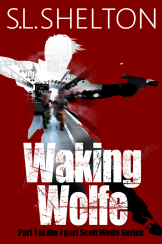
A. S.L. Shelton is a soldier, wrapped in a tech, inside a writer; there is no fiction, only exaggerations.

Q. You are a prolific writer and active blogger. How do you schedule time for both?
A. It’s difficult when both need to be done. But for the most part I only blog between writing on the novels. Blogging is a good way to network and to satisfy my need to write when I‘m not pounding out a first draft or crawling through the carnage of a developmental rewrite.

Q. At what point did you think, “Enough of being a techie I think I’ll go for a more risky way to earn a living and become a writer?”
A. I sold my tech company a few years ago. My intent was to farm and build heirloom furniture going into my early retirement. But an unfortunate incident with a Frisbee and weak ankles left me sitting in the house for an extended period of time. I have always been a writer, but the freedom of unlimited time and enslavement to a damaged foot conspired to give me this opportunity. I’m grateful for it every day.

Q. In what ways has writing satisfied or fulfilled you as a person?
A. Well if it weren’t for writing, all these voices in my head might start getting violent… I’d rather not have to deal with that in the pharmaceutical realm. Honestly though, creativity and influence go hand in hand. It’s an odd combination to simultaneously be introverted enough to create universes in your mind, but want to move the minds of the masses. There are few other mediums that do that as well as writing and it satisfies both those desires very well if one is attentive and reflective at the same time.

Q. You’ve had a variety of experience. How has that shaped the development of the protagonist in your novels?Waking Wolfe
A. I have done a lot of different things in my life and my bio only touches on a few of them. I owe that to my short attention span. Having such varied experiences allows me to tap into firsthand knowledge in a lot of areas of expertise. I keep those traits separated into various characters throughout all my stories, but I imbue Scott Wolfe with many of the imperfections that sort of scattered existence brings about.

Q. In your bio you say you are at odds with a need to kick the legs out from under those who abuse their power (political, economic or super). Talk about what that means in the context of story structure.
A. Wanting to change the world…ah. Wouldn’t that be nice. Fiction readers wish to be entertained first and foremost. That creates a dilemma for the fiction author; no one wants to be preached at, especially when trying to enjoy a story. I lean towards placing my message in a broad context, encompassing the story as a whole and then use it as the framework for the fiction. That way, you never have to go back and apologize for being too political, judgmental or coercive (except for food—people definitely need to eat better. JK)

Q. How does your protagonist in the Scott Wolfe series mirror your own life?
A. The series doesn’t really mirror my life except in eclectic bits and pieces. I spent a lot of time in the military and a lot of time in the tech industry, so certain funny or impactful anecdotes will migrate into the pages from my life, but for the most part, the Scott Wolfe Universe is all about me writing a story I’d like to read (or see as a movie).

Q. In what ways have you been changed by writing about this character, or have you?
A. I’m more aware of my own duality now than I was—or perhaps, going into such depth with my characters has made that duality more pronounced. We all have at least two faces; who we are to ourselves, and who we are to the world. Having an awareness of that helps bring a character to life but it sharpens your understanding of it in yourself.

Q. What do you wish people knew about you as a writer?
A. We read the reviews. Every author does, even the big ones like Brown, King, etc. We read them and take them to heart, even when we shouldn’t. Each one feels like a personal message written to us as an individual but posted for the world to see—and we crave them. Reviews are a sort of fuel to continue writing. The only thing better on the reader side is when someone posts a message to their friends, tagging us as someone worth reading. When that happens, I feel ten feet tall.

Q. The book cover for this series contains a repeat image overlaid or filled with different images and backed with different background color. Talk about how that developed and the ways you were involved in the design.
A. The early covers were just compilation photos. Constructs using pieces of my own photography and bits & pieces of other items. I’ve always pushed to improve the look of the covers, and enjoy doing the design.

Q. As an indie author, what do you think is most important to spend money on, editing or book design?
A. I design my own covers. I do it because I would rather spend my money on editors and proofing. As the series has become more successful, I’ve gone back and added additional rounds of proofing. The goal is to have a perfect product on release day, but when resources are limited and you can only afford two or three proofing passes, it’s nice to be able to go back later and update with more.

Q. Tell us what you are working on now and how people can connect with you online.
A. I’m in mid stroke of releasing Predator’s Game; the 6th novel in the Scott Wolfe Series. There’s only one left in the initial series. Aside from Scott Wolfe, I have six or seven other novels that I’ve been working on, but always set to the back burner when It’s time for a Scott story. As for connecting online. Twitter, Blog and Facebook are the best way to connect. I work hard connecting online and pride myself in being responsive to readers.

https://twitter.com/SLSheltonAuthor
https://www.facebook.com/SLShelton.Author/
https://wolfeauthor.wordpress.com/

Q&A With Rebecca Lee: Object Lessons

Writer Rebecca Lee lives in Charlottesville, Virginia. She has published with The Noctua Review, Cleaver Magazine, Rebecca LeeExistere Journal, The Rusty Nail.  Her blog is at www.AWordOfSubstance.com

Q. Tell readers about yourself and your writing goals.
A. Writing is my #1 passion in life. I’ve been writing since I could pick up a pen.  My main writing goal for the future is to publish a collection of short stories and vignettes.

Q. Your blog is an eclectic collection on a variety of topics. Comments from some readers refer to it as being quirky and original. Talk about the premise of the blog and why you started it.
A. My blog is mostly about objects personified. When I first started the blog I wanted to be able to write about anything and make it interesting. I hope that’s what I’ve been able to accomplish.

Q. Why write about what some would consider irrelevant, I mean power outlets? How can this be relevant?
A. Lately I’ve been writing about any kind of object that I think relates to a news article. The power outlet seemed like a perfect fit for the news surrounding college rape. Words have a way of seeping through the subconscious mind and piecing themselves into a way that makes sense. Even if those words are describing objects, one can still grasp the deeper meaning.

Q.Object enthusiast. Fiction writer. Six word stories on twitter.” That’s you’re Twitter profile. What does it all mean?
A. I’m a big fan of inanimate objects. If something isn’t alive, you can create and attach any sort of feeling to it. Who’s to say a silver spoon doesn’t feel a certain way? We’ll never know.

As for the six word stories – I came across Hemingway’s story and was inspired. He wrote: For sale: baby shoes, never worn. In just those six words, he said it all.

Q. In one sentence, describe yourself as a writer.
A. For sale: words with hopeful promise.

Q. What do you find most challenging, concept development or writing?
A. Depends on the writing and the concept. In general I find poetry to be the most natural form of writing and essays to be more challenging. Depending on the topic, my feelings can change.

Q. What do you wish people knew about you as a writer?
A. I write about everything. My blog focuses mostly on stories surrounding objects, however I write non-fiction and poetry as well.

Q. You have been published in a number of literary journals for your short fiction and nonfiction. How do you decide where you will submit your work and how do you handle rejection?
A. I read a lot of literary magazines. I spend a lot of time on Duotrope. I take writing classes with other students who also submit their work to various places. I always have an eye out for publications.

In terms of rejection, I think I might be a rejection addict. When I was eleven, I asked a boy to dance with me at a school social and he turned me down. It was love at first sight. Rejection gives me an energy that encourages me to try harder.

Q. What encouragement would you offer writers about getting published?
A. Read a lot of literary magazines. Find the best one that fits your style and keep trying.

Q. What are you working on now or what would you like people to know about your work and where they can find it?
A. I am working on a collection of short stories and vignettes as well as a memoir. My published online writing is available at Linden Ave Literary Journal, Haggard and Halloo Publications,  Chicago Record, *82 Review, and in the next issue of Cleaver Magazine. For print publications, I have been featured in The Rusty Nail, The Noctua Review, and Existere Journal. For regularly updated writing, please visit  www.AWordOfSubstance.com

Q&A With a Truth Seeker: Kathleen M. Rodgers

Q. In one sentence, who is Kathleen Rodgers?
A. I am a seeker of truth, and I use storytelling to try and find it.Kathleen M. Rodgers

Q. What do you wish people knew about you?
A. I am empathetic to those who struggle. Because I’ve overcome many obstacles in life, I try and encourage others not to give up. I joke that “HOPE” is my middle name. I try and offer hope in my stories.

Q. In writing Johnnie Come Lately you use grim themes about bulimia, addiction, and betrayal. Talk about how the complex story line developed?
A. My protagonist, Johnnie Kitchen, came to me many years ago while I was working on my first novel. At the time, I knew she was a woman who had overcome eating issues that developed from neglect she suffered as a child. Raised by loving grandparents who lost a son in a tragedy that stunned them to silence, Johnnie must find her way in the world while also dealing with an absentee mother. As a young wife, she carried these issues of abandonment and neglect into her early marriage, and years later her loyal and hardworking husband learns about an old betrayal. I also address the issue of military service during a time when our nation is at war. My challenge was to write about how the trauma of war can affect generation after generation. I’m continuing this theme in the sequel, Seven Wings to Glory.

Johnnie Come LatelyQ. Your characters are down-to-earth. You don’t take the easy way and make some inherently good and others identifiably bad. Where did you get the inspiration for these very relatable people?
A. Nobody is all bad or all good. Every human being is flawed, and I work hard to remember that when I create characters. In all of my fiction, my characters are sometimes composites of real people and other times they come fully formed in my imagination. For instance, Aunt Beryl in Johnnie Come Lately might be considered an antagonist. She’s a bossy busybody, and yet, she is also the truthsayer and the person in Johnnie’s life who finally tells the truth about who her father was. I also think about Johnnie’s husband, Dale. Dale is tasked with the job of trying to figure out how to forgive his wife. The fact that Dale initially withholds forgiveness from Johnnie makes him human. This character flaw intrigued me and helped propel the story forward. Even Granny Opal and Grandpa Grubb, as good as they were, had their own flaws and secrets, and Johnnie suffered because of it.

Q. This family has some obstacles to overcome. Without giving away the plot, talk about your journey to get from the telling moment of betrayal to resolution.
A. As I stated in the last question, Dale is such a good man. But even good men can hold grudges. The challenge for both Johnnie and Dale is how to move forward in their marriage and heal a hurt that cuts deep and affects every member of the family, even Brother Dog. And Dale, despite being a hard worker, has been holding Johnnie back from wanting to return to college. He uses money or lack of money as an excuse for his wife to pursue her dreams. There’s a scene in a restaurant when Johnnie discovers the truth about why Dale resists the idea of her going back to college. I cried when I wrote this scene because I hurt for Dale and the pain that followed him through life, no matter how successful he became. That’s a theme I write about a lot, how our past still affects our present and our future.

Q. Who do you identify most with in the story?
A. Johnnie’s two sons, D.J. and Cade. One is an artist and pacifist and the other is hell-bent on joining the military and going to war. (I continue this theme in the sequel.) Brother Dog, the family pet, is the glue that keeps this family together, and I relied on him to guide me through the story. And then there’s Mr. Marvel, the portly airline pilot who is Johnnie’s mysterious neighbor. I identify with Mr. Marvel because no matter how successful he became professionally, he still suffers from a childhood tragedy and the guilt that follows him. Mr. Marvel is every misunderstood person that gets marginalized or profiled or labeled. I have a deep abiding love and respect for this character. He taught Johnnie many lessons, and he lives on in both of our hearts. (And yes, I think of Johnnie as a real person.)

Q. You use journaling and writing letters to people you want to “speak to” but, for various reasons can’t. How does this method advance your story?
A. I have always loved the letter form. I used a series of letters in my first novel, The Final Salute, to cover a period when some of my characters went off to war and others stayed home. Letters and journal entries in fiction have the opportunity to pull readers deep into the story because they feel a personal and emotional investment with the characters. Because I received so much positive feedback from readers who loved that section of the novel, I decided to make Johnnie Kitchen a “closet writer” in Johnnie Come Lately. When she can’t share her deepest thoughts with the living and the dead, she turns to her journal and pours her heart out on paper. The reader discovers many secrets about beloved family members, old lovers, and Johnnie’s deepest fears and dreams for her future and that of her family. By parceling out tidbits of information here and there in the journal entries and in class papers Johnnie writes when she returns to college, we are able to piece together the missing pieces of the puzzle that makes up Johnnie’s life and the lives of the other story people (both the living and the dead).

Q. You’ve done quite a lot of writing and been published in various magazines. What challenges you about writing fiction?
A. I reached a point as a freelance writer when the subject matter stopped feeding my soul. Plus, I was limited by the confines of nonfiction and I wanted to explore so many more themes and subjects. And the only way to do that was to turn to fiction.

Q. How is writing fiction different from writing nonfiction?
A. With fiction, I can “write outside the lines.” I can use real life experiences and give them to my characters without letting actual events dictate how the story is told. My stories are full of emotional truths and themes that are dear to my heart, and my characters take on the issues and themes that I might not feel comfortable writing about in a nonfiction book or magazine article. Plus, I love to incorporate a touch of magical realism into my stories, and I’m not brave enough to deal with that in nonfiction. Writing fiction teaches me to be brave. I find courage by exploring deep and serious issues through my story people.

Q. What do you hope people get from reading Johnnie Come Lately, which by the way I thought was a wonderful story from beginning to end?
A. Thank you, Sharon. I hope my readers are able to apply some of the story lessons from the novel and apply them to their own lives. Most of all, I hope they are entertained and finish the book feeling hopeful for their own lives and the lives of their families.

In any of my novels, I want my readers to laugh and cry with my characters. I want fiction and reality to blend into a seamless dimension where my characters know they are real people and my readers think they are my characters.

Current news about Kathleen

Kathleen is working on Seven Wings to Glory, the sequel to Johnnie Come Lately.

Sequel concept: After sending her youngest son to war in Afghanistan in 2009, Johnnie Kitchen finds herself battling a war of racial injustice in her small hometown of Portion, Texas. Will she back down after being threatened for speaking out? Or will she do the right thing and pursue justice? And will her Army son, who took an oath to protect ALL Americans, return home safely to Portion?

Click here to read Kathleen’s blog. 

___________________________

More about Kathleen from her website: Texas based author Kathleen M. Rodgers is a former frequent contributor to Family Circle Magazine and Military Times. Her work has also appeared in anthologies published by McGraw-Hill, University of Nebraska Press/Potomac Books, Health Communications, Inc., AMG Publishers, and Press 53. In 2014, Kathleen was named a Distinguished Alumna from Tarrant County College/NE Campus. Three of her aviation poems were featured in a new exhibit at the Cradle of Aviation Museum on Long Island, NY. More…

Q&A With Jane Friedman: Making the Hard Decisions

From Jane’s website: Jane Friedman has 20 years of experience in the publishing industry, with expertise iJane Friedmann digital media strategy for authors and publishers. From 2001–2010 she worked at Writer’s Digest, where she ultimately became publisher and editorial director of the $10-million multimedia brand. More recently, she served as the digital editor for the Virginia Quarterly Review, where she led a strategic overhaul of its website and launched digital subscriptions.

Jane currently teaches digital media and publishing at the University of Virginia and is a columnist for Publishers Weekly. The Great Courses just released her 24-lecture series, How to Publish Your Book. She also has a book forthcoming from the University of Chicago Press, The Business of Being a Writer (2017).

Q. In one sentence who is Jane Friedman?
A. I’m the perfect balance of realist and optimist.

Q. Name three things you wish you had done differently to get where you are now in your career?
A. 1) In college I wanted to minor in computer science; I wish I had pushed myself to do that in the absence of encouragement.
2. When I was younger, I avoided making hard decisions even if I knew they were the right decisions. Today, once I recognize the right action, I take it as soon as possible.
3. I wish someone had told me that you can’t be friends with people you manage, no matter what the circumstance. I could’ve used a mentor, someone with 10 or 20 years more experience in publishing or management, but didn’t have one.

Q. What one thing happened to you that made you stop and think, “Is this really what I want out of life?” or have you always been satisfied with your career and personal trajectory?
A. My attitude toward life changed after I finished watching the TV series Six Feet Under. I divorced, I moved, I eventually left corporate publishing.

It might sound exhausting, but to some extent, I’m now asking this question every day when I’m completing work. I try to be self-aware about how I’m feeling—what’s draining my energy and what’s adding. It’s like what Steve Jobs advised in his famous graduation speech: “Every morning I look in the mirror and ask myself: If today were the last day of my life, would I want to do what I am about to do today?” I’m always tweaking what I do daily, as well as thinking long-term: OK, it took me 5 years to accomplish this, or 10 years to reach that goal. Am I doing what’s necessary today to achieve what I’m envisioning 1, 5, 10 years out? How does my work today serve where I want to be tomorrow? If I can’t find a connection, I shed it.

Q. Which is more important, time management or creativity, and why?
A. Time management. You have to make time to allow creativity to flourish. John Cleese once said, “If you’re racing around all day ticking things off lists … and generally keeping all the balls in the air then you are not going to have any creative ideas.” (Thank you to Porter Anderson for sharing that quote with me!)

Q. According to a 2013 Forbes article, between 600,000 and 1 million books are published each year in the U.S. An infinitesimal percentage of those books ever gain a following. Given this do you think there will be more business for your services in the future or less, and why?
A. People will always believe that their book is the exception, that they will beat the odds, that they’re the special snowflake. Whether they’re right or not, the very motivated author typically seeks a guide or mentor to increase their chances at success, or help them make quicker progress than they would on their own. So I don’t see my business slowing down any time soon.

Q. If you could take a slow boat to anywhere, where would you go and what would you do when you got there?
A. I’d head to a cottage on Inis Meain, where I once spent a Christmas holiday alone focusing on my own creative work without interruption or obligation.

For more information about Jane Friedman and the services she provides, check out her website at www.janefriedman.com

A Little Rejection Never Hurts

… at least not for long.

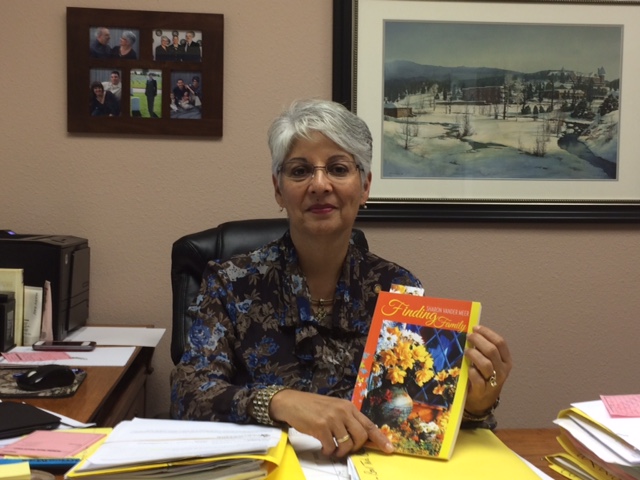
Finding FamilySigh. Just received notification that I was not selected as a winner in the Writer’s Digest Self-Published Book contest. I entered “Finding Family,” my contemporary novel about a family coming together. Didn’t even make honorable mention. I tell myself winning would have been a miracle given there were more than 2,600 entires. It doesn’t help. It still stings.

No, I wasn’t among the select few. What does it take to get the attention of judges in these types of contests? I wish I knew. Actually, I do know. It takes being a cut above, working hard, and creating a book that has appeal. Too whom and in what way? That is the mystery and one I have yet to figure out.

The truth is I don’t even know how to sell my books beyond the few hundred I’ve already sold. I see books on Amazon by unknown authors with more than 500 Amazon reviews. Really? How does that happen? I don’t think I have 500 readers collectively who have read the four books I’ve written, and less than five (meaning as few as two) reviews on Amazon. Does it matter? Hell if I know. It is admittedly a measure of the number of people who have read the book being reviewed, otherwise they wouldn’t comment, right?

So what am I not good at, folks? Writing or marketing? Or both. Egads! I don’t know if I want an answer to that.

Either way I appreciate the “There Are No Rules” October platform building challenge for today. Build a Time Management Plan, Robert Brewer tells stalwart participants. Why does it matter to my fragile writing ego? Because one of the tasks I need to include in my Time Mangement PLan is learning how to market my work. This is extrememly hard for me. I can sell just about anything to anybody, but I’m hesitant and perhaps a wee bit fearful about selling my work. I’ve read way too many bad self-published e-books. On the other hand, I’ve read some really good ones. I count my books among the good ones… except for those darned errors overlooked in editing and the other little imperfections that drive me nuts after the fact.

Success at anything and time management are kissing cousins. Knowing what you are going to do and when are key elements for being productive. My problem is believing I can do more and consequently over scheduling. What I have learned is the importance of doing less more effectively. Better to do three things well than ten things haphazardly or with guilt-ridden not at all. Today’s challenge is a good exercise about writing with intention, and building a marketing strategy with intention. Now to do it.

But I need to go to the store, and post office, and there’s that luncheon I need to attend, and later I think I’ll clean my closet, and then I’ll…

The pain of rejection is the self-doubt it inflects, even if for a little while. It taints my energy and makes me want to do anything but write, which is why I sat down and made myself write this post. Getting back on the horse, as the cliché says. I don’t know if I will ever write another book of ficiton, but I have lots of other writing to do. So onward and upward with a smile and hope, the Band-Aids to a wounded writing spirit.

Write to Excite Engagement

BloggingDo your readers read you?

My platform challenge for today is to write a post that includes a call to action. I try to do that in every post, with the exception of my poetry. I don’t always get a call to action in, but I try. For example, the second two words in this post are a call to action. By clicking on the link you can learn more about the platform challenge facilitated by Writer’s Digest senior content editor Robert Lee Brewer. See, I just did it again. If you click on the word “poetry” you will find a poem I wrote following the shooting in Roseburg, Oregon.

The purpose of a CTA is to engage readers at a deeper level. I have written a number of book reviews and other content that is all over the place. To get as much mileage as possible out of those posts, I can subtly guide readers to previous posts on similar subjects, or I can be deliberate about promoting my book, “Finding Family.” The goal is to encourage readers to learn more by clicking on a link.

As a really lousy self-promoter, I’m not much good at the call to action for my stuff, but I’m more than happy to take readers to information I believe they will enjoy or get something from.

Why reader response matters

In some ways posting creates an opportunity for dialogue between the writer and her readers. The comment section at the bottom of posts is there for a reason. As a writer it is encouraging to me when someone comments, positive or negative. Why? Because as a writer I know my work is being read. When it just sits there, even though I can count the clicks on my analytics page, I don’t really know how much of what I have written is being read and thought about. Comments are the lifeblood of a post. So please comment below.

If comments are the lifeblood, “like” and “share” are the heartbeat. These two actions by a reader lets others know the content touched something in him and inspired a response. So when you read a post, mine or anyone else’s, like it and share it with friends and family.

I want to thank anyone who has ever commented, liked or shared one of my posts. It means more to me than you can imagine.


And the winner is…

Ruth MaresThank you Ruth Mares, for subscribing to One Roof Publishing and congratulations on winning a free copy of “Finding Family.”

I didn’t reach my goal of 100, but I did get new subscribers so it was worth the effort. With that in mind, I am extending the offer. Become a subscriber by the end of October and you will  receive a free PDF copy of my chap book of poetry, “Lines,” and be entered into a drawing for a free signed copy of “Finding Family.” Don’t forget, when you get the e-mail that you are now a subscriber, you must verify that you accept by clinking on the link.

Coming soon: I’m going to try something new, a serialization of my sequel to Thunder Prime: Fog Island (published also as The Ballad of Bawdy McClure). It will sort of (I hope) be something along the lines of the Perils of Pauline, you know, a cliff hanger at the end of every episode/chapter. I don’t know if this can be made to work, but I’m going to give it a shot. In the end I will have a book length manuscript for publication. The first episode will be free; there will be a nominal charge for access to following episodes. Sound intriguing? Stay tuned.

Remember to subscribe to receive a free PDF of my book of poetry and a chance to win a free copy of Finding Family.

Writer’s Block

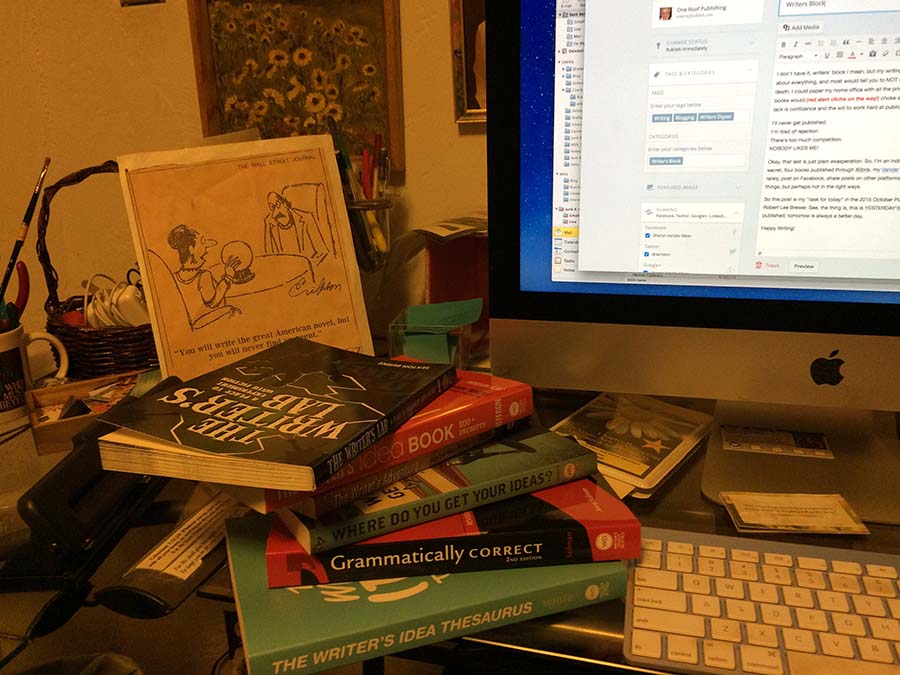
I don’t have it, writer’s block I mean, but my writing sort of wanders all over the place. One Roof Publishing is where I write about everything, and most would tell you to NOT do that. Focus. Write. Get it right. Do it regularly. Make it work. SEO it to death. I could paper my home office with all the printouts I have from other people’s blogs about writing. My library of writing books would (red alert cliche on the way!) choke a horse. I’m a serious contender for Writing Student of the Month. What I lack is confidence and the will to work hard at publication. It’s too easy to slip into negative mode:

Write NowI’ll never get published.
I’m tired of rejection.
There’s too much competition.
NOBODY LIKES ME!

Okay, that last is just plain exasperation. So, I’m an indie author with one desktop published book of poetry I keep a deep dark secret, four books published through Xlibris, my Vander Meer Books website, and this confetti blog. So I write. I Tweet but rarely, post on Facebook, share posts on other platforms, but I can’t even tell you what they are. So I’m doing all the right things, but perhaps not in the right ways.

So this post is my “task for today” in the 2015 October Platform Challenge facilitated by Writer’s Digest senior content editor Robert Lee Brewer. See, the thing is, this is YESTERDAY’S task, and that sort of explains why I don’t get things done and published; tomorrow is always a better day.

Happy Writing!

A blatant pitch for book sales

…from a terrible marketer

Finding Family

My problem with writing has nothing to do with writing; it has to do with selling. Every book I have written is worth reading, the last one perhaps more so than the first three. Not because it is a better book, but because I learned a lot between book one and book four.

What I should have had for all my books is a good editor. Reality check here. As an indie author, I can’t afford an editor. A good editor is worth what he or she charges, no doubt about it, but given that I’m so horrible at selling my work, I’d never recover my costs. The argument in favor of an editor is that grammar and punctuation improve copy so it will sell better.

Uh, “Fifty Shades of Grey” anyone?

Hel-lo-o!

I have not read the books because erotica isn’t my cup of tea, so my statements here are based on reviews and commentary, written by people who write for a living. Many of them are baffled by the success of these books, which by some accounts are poorly constructed, have questionable content, and basic plot problems – as in there isn’t one. And yet, “50” and its sequels have netted author EL James A LOT OF MONEY! She has sold MILLIONS of copies and landed a lucrative deal for movie rights. I don’t know if she had an editor, but if she did, she paid her too much. What James does have is an identified audience looking for cheap thrills. Erotica sells.

So, what does it take to sell books? That is a very complex question. It helps that –

a) You have absolute confidence your book is the best thing that’s ever been written.
b) That you are willing to wring out of every one you know a promise to do a review (POSITIVE ONLY) and post it on Amazon and Good Reads and wherever else they can find to post it on your behalf.
c) Know your audience, or at the very least, have one.

First off, I hesitate to use friends to promote my work. Number one, I’m afraid they will feel obligated to say yes while thinking, “Is she kidding me? This thing is the worst thing I’ve ever read!?”

And second… forget it, I can’t get past number one. It’s the fear of “not being good enough” that plagues even accomplished writers.

The thing is, I believe my books are quite good. Good enough, in fact, to fly magically off the shelves without much help from me. Won’t happen. Like all authors, I must work at promoting my books every single chance I get, something I am totally not good at.

A second and equally important factor is that, “knowing your audience,” thing.

I may not be there yet when it comes to confidence, but identifying my audience is at a whole other level. People who like to read books? Hmmm, yes, but there is so much more to it. The whole genre thing drives me nuts. Plus I haven’t written just one kind of book. I’ve written the books I like to write. One is a book of inspirational reading, two are sci-fi, and the fourth is a contemporary novel about a women of a certain age.

In “Finding Family,” it is clear early on that Lilly Irish has never understood her worth to others. Following the death of her husband she becomes accustomed to living alone. She is stubbornly independent. And then her dead sister’s daughter and her three children arrive with their dog. Calm turns to chaos and along the way Lilly… well, if I said any more I’d be giving the story away.

This story is funny and sad, just like life. You will recognize the characters because they’re like all of us, trying to find their way in life, day-by-day. “Finding Family,” characters aren’t based on any one in particular, or any family in particular; it is grounded in the reality that no one is perfect. How these imperfect people come together makes for an entertaining and satisfying read.

And yes, this is a sales pitch for “Finding Family,” and a request that you buy it, read it, and post a review – brief or long – on Amazon and Good Reads and wherever else you can. I would like for it to be positive, but I would rather it be honest.

Thanks,
Sharon

NOTE: I have Finding Family available for purchase. If you would like to order a book directly from me e-mail me at fsharon@msn.com. Book price is $19.99.

Finding Family is available at Amazon and other online book retailers in soft cover and as an e-book from XLIBRIS

Paperback: 232 pages
Publisher: XLIBRIS
Language: English
ISBN-10: 1499035489
ISBN-13: 978-1499035483


Also look for my latest book:
Thunder Prime Hunter’s Light
Paperback $15
Digital Format $2.99