Caveat Emptor: AI at work

Sharon Vander Meer

Imagine my delight when Ann Patchett and Elizbeth Strout reached out to me! These two best-selling gifted writers, reaching out TO ME. Glowing remarks pepper their emails about my work and my future as a writer. They are both so delighted to get to know me and more about my journey as an author. Be still my beating heart!

To be clear, Ann Patchett nor Elizbeth Strout reached out to me.

I will say there was a momentary flutter of excitement, hardly a breath of time, when I thought just maybe these two amazing women even knew I existed, but of course, they don’t. These are phishing expeditions by unscrupulous book marketers using AI to summarize (inaccurately) my work and bio, whose only interest is selling promotional packages ‘guaranteed’ to get results. There are no guarantees when it comes to book sales. If the book is good and has the right exposure, and gains traction, and has appeal to a particular audience, then your book will sell… maybe, and that is if you have a traditional publisher aiding in the development, editing and marketing of your book.

As an indie author you either pay through the nose for those services as part of the publishing package or you muddle through as best you can, which for many of us is more of a muddle than marketing.

Indie publishers are in business, not to make money for you, but to make money for themselves, and that doesn’t come from book sales. I’m sure there are successful indie authors who have respectable success, and more power to them. I’ve even heard that known, successful writers have turned to indie publishing after having success through respectable traditional publishers, but I’m hard pressed to name who those authors are.

My latest publication, a second edition of Future Imperfect, a dystopian novel about a near future transformed by self-interest and suspicion, is an example.

I’ve had sales, but nowhere near what I would have hoped. See, the thing is, I’m good at writing stuff, not so good at convincing people to buy what I’ve written. I fall into that category of writer who has the satisfaction of knowing the work is in print and may be read by anyone who happens to stumble upon it.

You can stumble upon Future Imperfect at Barnes & Noble, or Amazon, and I hope you do. This is the extent of my marketing plan, although I hope to have a couple of book signing events in my hometown of Las Vegas, N.M., in the near future.

In conclusion, to serious writers who want to be published, pursue traditional publishing. There’s lots of help for how to do that at Writer’s Digest, among others. If you’re determined to go indie there’s help for that as well, at Writer’s Digest, among others. Yes, that is redundant, but we can never be reminded enough what might be good for us. Keep in mind that all this help comes at a cost based on a business model that benefits the provider of services. There’s nothing wrong with that, but the old saying ‘buyer beware’ is an old saying because it is cautionary advice gained from experience.

Will I continue to self-publish? Probably. At 81 (almost 82), I don’t see me developing a long-term relationship with a traditional publisher. If you are interested in purchasing any of my books, I believe Books of the Southwest at Rough Rider Antiques has some of them in stock, or you can contact me directly at fsvandermeer@gmail.com. Go to the Books link in the menu to find out more.

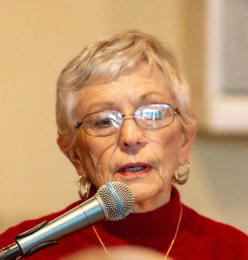
PHOTO CREDT: BOB HENSSLER

IS SELF-PUBLISHING RIGHT FOR YOU?

To be published, first you must write. As E.B. White said: “A writer who waits for ideal conditions under which to work will die without putting a word on paper.” The same can be said of publishing. It is work and you must work at it, whether you are going the indie (self-publishing) or traditional route. Your creative muse may not like to hear this, but taking your book to market is a business, and as with any business, you are in charge of its success.

Indie Publishing means you take on the multifaceted role of getting your book before the eyes of readers. If you’re ready to do that, then self-publishing may be right for you. In self-publishing, you, the writer, control every stage of the process.

Traditional publishing is the Gold Standard for most – but not all – writers. The focus of this article is on self-publishing but it also looks at traditional publishing. Click the download button for a PDF of my recent Las Vegas Lit presentation, Is indie publishing right for you?

Sources for parts of this content include Kindle Direct Publishing, selfpublishing.com, nybookeditors.com, and xlibris.com.

The work of traditional publishing includes knowing your target audience, getting an agent, writing a query letter.

On the plus side – the author gets help with editing, marketing and distribution. Note the emphasis on help. Traditional publishers don’t do everything especially when it comes to marketing and distribution.

The work of indie publishing includes knowing your target audience, hiring a qualified editor, hiring a cover designer, hiring an interior format designer, deciding which publishing platform to use, managing your book’s marketing and distribution, getting readers to review your book and post to appropriate sites, vie for the attention of readers in a saturated market, and this is just the tip of the iceberg. With Kindle Direct Publishing, if you have the background and skill sets, you may want to do most of this yourself. KDP has many free tools for you to use. The one service you want to consider paying for is a reputable editor. Even the most self-critical writer will inadvertently turn a blind eyes to his/her/their mistakes.

On the plus side, you control how your book will be managed and in most cases, you get 100% of royalties

In the attached presentation I show a sample self-publishing package from a company called Xlibris, with which I have had some experience. The bad news is that in the basic package, $1,999, the printing cost per book can be pricey, $11 to $13 per 280 page book, not including shipping cost. That would mean selling your book at a markup of 100 percent ($22 to $26) in hopes of making back your initial investment. That doesn’t take into consideration paying an editor, cover creator and interior book designer, marketing, and distribution costs. The good news, if you can pay the price, is that self-publishing companies have packages that cover a lot of these services. In the case of Xlibris packages range from $1,999 with limited services to $14,999. The goal of these companies is not to sell your book, but to sell you services. Not all companies are alike, so do your research before choosing one.

KDP, Kindle Direct Publishing, is a more affordable option with printing costs for a 250-page book at about $3.65 per copy, not including shipping costs. Some KDP advantages include Amazon Kindle exclusive, your book is available quickly, you have absolute control of the final product, the price for resale is more in line with the market, interior design is more flexible, and updating the file is easy. So, yes, printing costs are less, but you will still need to invest in paying an editor, cover creator and interior book designer, plus marketing and distribution costs.

The really good news is that as a self-published author you are in good company. Notable indie authors include Mark Twain, John Grisham, L. Ron Hubbard, Walt Whitman, Richard Paul Evans, Beatrix Potter, T.S. Elliot, Upton Sinclair, Margaret Atwood… just to name a few. Some of these writers elected to self-publish after becoming established. A few were self-published right out of the gate.

1. No contact details.​ You should be able to pick up the phone and call, or at least send an email and get a personalized response within 24-48 hours.

2. No testimonials.​ There should be plenty of social proof of other authors who’ve worked with the service.

3. A hard sell. ​If the sales team is pushing you to upgrade your package, it’s a warning sign that they only care about getting your money and not about getting results.

4. Cryptic or unclear pricing. ​Reputable services explain exactly how much they charge. They don’t require that you email them first for pricing.

5. Required purchases.​ Avoid companies that force you to buy a specific number of copies as part of your contract.

6. Asks you to sign over your rights.​ The service is an assistant, not a publisher. You should retain all material rights.

7. Guarantees that you will become a bestseller.​ No one, not even a traditional publisher, can fulfill such a promise.

Kindle Direct Publishing https://kdp.amazon.com

selfpublishing.com https://selfpublishing.com

Lulu https://www.lulu.com/

IngramSpark https://www.ingramspark.com

Good luck on your self (indie) publishing journey. It is not for the faint of heart. Determination, knowing your technical limitations, understanding your target market, having persistence and discipline, these are among the skills you need or will want to acquire. Anyone can write a book. Anyone can self-publish a book. Finding people to buy and read your book, that’s a whole new ballgame. That’s what makes it challenging, engaging and fun!

For more information about Las Vegas Lit go to www.lvlitnm.org


PHOTO CREDIT: BOB HENSSLER