Caveat Emptor: AI at work

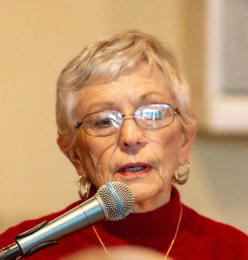
Sharon Vander Meer

Imagine my delight when Ann Patchett and Elizbeth Strout reached out to me! These two best-selling gifted writers, reaching out TO ME. Glowing remarks pepper their emails about my work and my future as a writer. They are both so delighted to get to know me and more about my journey as an author. Be still my beating heart!

To be clear, Ann Patchett nor Elizbeth Strout reached out to me.

I will say there was a momentary flutter of excitement, hardly a breath of time, when I thought just maybe these two amazing women even knew I existed, but of course, they don’t. These are phishing expeditions by unscrupulous book marketers using AI to summarize (inaccurately) my work and bio, whose only interest is selling promotional packages ‘guaranteed’ to get results. There are no guarantees when it comes to book sales. If the book is good and has the right exposure, and gains traction, and has appeal to a particular audience, then your book will sell… maybe, and that is if you have a traditional publisher aiding in the development, editing and marketing of your book.

As an indie author you either pay through the nose for those services as part of the publishing package or you muddle through as best you can, which for many of us is more of a muddle than marketing.

Indie publishers are in business, not to make money for you, but to make money for themselves, and that doesn’t come from book sales. I’m sure there are successful indie authors who have respectable success, and more power to them. I’ve even heard that known, successful writers have turned to indie publishing after having success through respectable traditional publishers, but I’m hard pressed to name who those authors are.

My latest publication, a second edition of Future Imperfect, a dystopian novel about a near future transformed by self-interest and suspicion, is an example.

I’ve had sales, but nowhere near what I would have hoped. See, the thing is, I’m good at writing stuff, not so good at convincing people to buy what I’ve written. I fall into that category of writer who has the satisfaction of knowing the work is in print and may be read by anyone who happens to stumble upon it.

You can stumble upon Future Imperfect at Barnes & Noble, or Amazon, and I hope you do. This is the extent of my marketing plan, although I hope to have a couple of book signing events in my hometown of Las Vegas, N.M., in the near future.

In conclusion, to serious writers who want to be published, pursue traditional publishing. There’s lots of help for how to do that at Writer’s Digest, among others. If you’re determined to go indie there’s help for that as well, at Writer’s Digest, among others. Yes, that is redundant, but we can never be reminded enough what might be good for us. Keep in mind that all this help comes at a cost based on a business model that benefits the provider of services. There’s nothing wrong with that, but the old saying ‘buyer beware’ is an old saying because it is cautionary advice gained from experience.

Will I continue to self-publish? Probably. At 81 (almost 82), I don’t see me developing a long-term relationship with a traditional publisher. If you are interested in purchasing any of my books, I believe Books of the Southwest at Rough Rider Antiques has some of them in stock, or you can contact me directly at fsvandermeer@gmail.com. Go to the Books link in the menu to find out more.

PHOTO CREDT: BOB HENSSLER

Dream on

pexels-photo-279415.jpegI love to write, it’s what I do. As you know, Blind Curve is now available through this site and at Amazon. My concern is that I’m preaching to the same choir. Most of you have heard about my publishing journey in one form or another. I’m asking a huge favor. Share this post with your followers, friends and family. It will mean a lot to me.

The job of marketing one’s work is more angst ridden and time consuming by far than writing the book. Right now I’m working on my episodic novel, Hunter’s Light, Pella’s Quest (episodes posted every Friday), but it is a challenge to do that and work on getting attention for Blind Curve. I have marketing and advertising sales experience, but the focus has always been on something else or for someone else. This time the spotlight is on me, or at least on my books. My dream come true is to look at my royalty statement and see something other than zeros.

How can I be sure readers will notice my baby among the thousands of others on the shelves? Well, I can’t, that’s why, as a writer, I must hit the streets and get my message out there. I know my book is compelling and dramatic, a mystery wrapped up in a puzzle, and that the characters feel like people you know and want to root for. How do I let potential readers know? That is part of what I have learned on my writing and publishing journey, so far.

Writing is my dream job and I love it, even though I know the following applies to me and most writers:

  • Nobody knows or cares who you are as a writer, not even your family and friends. If you want to sell them a book, you have to ask if they want to buy it.
  • Writing is an isolating profession. You don’t write 2000 to 4000 words a day drinking coffee at the coffee shop, but it is also a business. If you don’t sell your book, you’re not valuing your work.
  • Writing is mentally and physically taxing. Writers like David Baldacci and Margaret Atwood continue to be successful because they are dedicated writers who devote their work time to writing, not sitting at the coffee shop.
  • Writers must be ready for criticism and be able to see their books for what they are: works in progress. Editing, revising, proofing, rewriting, tossing the whole damn thing out at times, that’s all part of writing. This is so hard, much more difficult than you can imagine. It’s work, not unlike the work you do.
  • When I think my book is just too precious for words, I know I’m probably on the wrong track. I’ve learned to put the work aside for awhile and then read it like a reader. Read it aloud. Hear how it sounds.
  • I’ve learned to trust my instincts. If something seems off kilter in the narrative, my readers will likely get the same vibe.
  • I’ve learned it is essential to be confident. If I don’t believe in my characters, no one else will. If I don’t believe in my concept I wander in a wilderness of wrong words.
  • Writing is like dreaming when you’re awake. You convert those dreams into stories and poems and songs. My hope is that what I write will ring a bell with readers and lead them to dream along with me.
  • Writing is a business. As a writer, I must keep that in mind.
  • Writing is an itch. The only way to scratch that itch is to sit down in front of a keyboard and slog it out. The itch is what keeps me at the computer.

Yes, writing is the itch that must be satisfied with words and the magic that happens when those words come together in a great story. The itch is why I never stop dreaming.


Please Follow, Like, Comment and Share this post. Your feedback is important.

I am an indie author of six books and two chap books of poetry. Check the BOOKS tab to find out more. Follow me at www.vandermeerbooks.com, https://www.facebook.com/vandermeerbooks, Amazon Author Central. I’m also a member of the Las Vegas Literary Salon, a group committed to sharing the work of local writers. Follow LVLS at lvnmlitsalon.org. Thanks for reading and sharing this post.