Q&A With a Truth Seeker: Kathleen M. Rodgers

Q. In one sentence, who is Kathleen Rodgers?
A. I am a seeker of truth, and I use storytelling to try and find it.Kathleen M. Rodgers

Q. What do you wish people knew about you?
A. I am empathetic to those who struggle. Because I’ve overcome many obstacles in life, I try and encourage others not to give up. I joke that “HOPE” is my middle name. I try and offer hope in my stories.

Q. In writing Johnnie Come Lately you use grim themes about bulimia, addiction, and betrayal. Talk about how the complex story line developed?
A. My protagonist, Johnnie Kitchen, came to me many years ago while I was working on my first novel. At the time, I knew she was a woman who had overcome eating issues that developed from neglect she suffered as a child. Raised by loving grandparents who lost a son in a tragedy that stunned them to silence, Johnnie must find her way in the world while also dealing with an absentee mother. As a young wife, she carried these issues of abandonment and neglect into her early marriage, and years later her loyal and hardworking husband learns about an old betrayal. I also address the issue of military service during a time when our nation is at war. My challenge was to write about how the trauma of war can affect generation after generation. I’m continuing this theme in the sequel, Seven Wings to Glory.

Johnnie Come LatelyQ. Your characters are down-to-earth. You don’t take the easy way and make some inherently good and others identifiably bad. Where did you get the inspiration for these very relatable people?
A. Nobody is all bad or all good. Every human being is flawed, and I work hard to remember that when I create characters. In all of my fiction, my characters are sometimes composites of real people and other times they come fully formed in my imagination. For instance, Aunt Beryl in Johnnie Come Lately might be considered an antagonist. She’s a bossy busybody, and yet, she is also the truthsayer and the person in Johnnie’s life who finally tells the truth about who her father was. I also think about Johnnie’s husband, Dale. Dale is tasked with the job of trying to figure out how to forgive his wife. The fact that Dale initially withholds forgiveness from Johnnie makes him human. This character flaw intrigued me and helped propel the story forward. Even Granny Opal and Grandpa Grubb, as good as they were, had their own flaws and secrets, and Johnnie suffered because of it.

Q. This family has some obstacles to overcome. Without giving away the plot, talk about your journey to get from the telling moment of betrayal to resolution.
A. As I stated in the last question, Dale is such a good man. But even good men can hold grudges. The challenge for both Johnnie and Dale is how to move forward in their marriage and heal a hurt that cuts deep and affects every member of the family, even Brother Dog. And Dale, despite being a hard worker, has been holding Johnnie back from wanting to return to college. He uses money or lack of money as an excuse for his wife to pursue her dreams. There’s a scene in a restaurant when Johnnie discovers the truth about why Dale resists the idea of her going back to college. I cried when I wrote this scene because I hurt for Dale and the pain that followed him through life, no matter how successful he became. That’s a theme I write about a lot, how our past still affects our present and our future.

Q. Who do you identify most with in the story?
A. Johnnie’s two sons, D.J. and Cade. One is an artist and pacifist and the other is hell-bent on joining the military and going to war. (I continue this theme in the sequel.) Brother Dog, the family pet, is the glue that keeps this family together, and I relied on him to guide me through the story. And then there’s Mr. Marvel, the portly airline pilot who is Johnnie’s mysterious neighbor. I identify with Mr. Marvel because no matter how successful he became professionally, he still suffers from a childhood tragedy and the guilt that follows him. Mr. Marvel is every misunderstood person that gets marginalized or profiled or labeled. I have a deep abiding love and respect for this character. He taught Johnnie many lessons, and he lives on in both of our hearts. (And yes, I think of Johnnie as a real person.)

Q. You use journaling and writing letters to people you want to “speak to” but, for various reasons can’t. How does this method advance your story?
A. I have always loved the letter form. I used a series of letters in my first novel, The Final Salute, to cover a period when some of my characters went off to war and others stayed home. Letters and journal entries in fiction have the opportunity to pull readers deep into the story because they feel a personal and emotional investment with the characters. Because I received so much positive feedback from readers who loved that section of the novel, I decided to make Johnnie Kitchen a “closet writer” in Johnnie Come Lately. When she can’t share her deepest thoughts with the living and the dead, she turns to her journal and pours her heart out on paper. The reader discovers many secrets about beloved family members, old lovers, and Johnnie’s deepest fears and dreams for her future and that of her family. By parceling out tidbits of information here and there in the journal entries and in class papers Johnnie writes when she returns to college, we are able to piece together the missing pieces of the puzzle that makes up Johnnie’s life and the lives of the other story people (both the living and the dead).

Q. You’ve done quite a lot of writing and been published in various magazines. What challenges you about writing fiction?
A. I reached a point as a freelance writer when the subject matter stopped feeding my soul. Plus, I was limited by the confines of nonfiction and I wanted to explore so many more themes and subjects. And the only way to do that was to turn to fiction.

Q. How is writing fiction different from writing nonfiction?
A. With fiction, I can “write outside the lines.” I can use real life experiences and give them to my characters without letting actual events dictate how the story is told. My stories are full of emotional truths and themes that are dear to my heart, and my characters take on the issues and themes that I might not feel comfortable writing about in a nonfiction book or magazine article. Plus, I love to incorporate a touch of magical realism into my stories, and I’m not brave enough to deal with that in nonfiction. Writing fiction teaches me to be brave. I find courage by exploring deep and serious issues through my story people.

Q. What do you hope people get from reading Johnnie Come Lately, which by the way I thought was a wonderful story from beginning to end?
A. Thank you, Sharon. I hope my readers are able to apply some of the story lessons from the novel and apply them to their own lives. Most of all, I hope they are entertained and finish the book feeling hopeful for their own lives and the lives of their families.

In any of my novels, I want my readers to laugh and cry with my characters. I want fiction and reality to blend into a seamless dimension where my characters know they are real people and my readers think they are my characters.

Current news about Kathleen

Kathleen is working on Seven Wings to Glory, the sequel to Johnnie Come Lately.

Sequel concept: After sending her youngest son to war in Afghanistan in 2009, Johnnie Kitchen finds herself battling a war of racial injustice in her small hometown of Portion, Texas. Will she back down after being threatened for speaking out? Or will she do the right thing and pursue justice? And will her Army son, who took an oath to protect ALL Americans, return home safely to Portion?

Click here to read Kathleen’s blog. 

___________________________

More about Kathleen from her website: Texas based author Kathleen M. Rodgers is a former frequent contributor to Family Circle Magazine and Military Times. Her work has also appeared in anthologies published by McGraw-Hill, University of Nebraska Press/Potomac Books, Health Communications, Inc., AMG Publishers, and Press 53. In 2014, Kathleen was named a Distinguished Alumna from Tarrant County College/NE Campus. Three of her aviation poems were featured in a new exhibit at the Cradle of Aviation Museum on Long Island, NY. More…

Q&A With Kate Barnwell: An English Poet

Kate BarnwellKate Barnwell is a creative writer of modern, romantic poetry and lyrics. Her work reflects a desire to touch the soul; find new and beautiful ways to enhance and describe life. For more about her go to katebarnwell.com.

Q. In one sentence, who is Kate Barnwell?
A. An English, romantic poet and writer; living a variety of lives in and amongst the diversity and beauty of the city, sea and countryside.

Q. How is writing poetry different from writing lyrics?
A. Songs are essentially poetry put to music. A poem will stand alone and requires no accompaniment. Lyrics are enhanced by music and require the work of a composer.

I have worked with two composers: one classical and one young modern. I found it fascinating to see the different ways they interpreted and experienced my words.

The classical composer took the words and added a deep orchestral score, which when performed by a mezzo soprano, at an International Composers Festival, received a standing ovation with many members of the audience in tears. For me, this was both surprising and somewhat gratifying!

The modern composer took another set of lyrics and turned them into a guitar lead folk approach. This was perfect for me as I was able to connect my work and the appeal of the words to different listeners, age-groups and styles.

With lyrics I don’t feel you have the opportunity to explore the same depth of feeling as you are conscious of needing to make an impact rapidly. With poetry there is more time to create imagery. I spend time working with the imagination exploring the use of metaphors and similes, life and nature and enjoy the process of presenting the world and emotions in new ways.

Kate's Books
Books by Kate Barnwell

Poetry can be read time and time again, at different stages in your life; it has more layers and depth of meaning and can be a great companion.

Q. I love the poems read on your website www.katebarnwell.com. Talk about your reaction to hearing your work read by someone else.
A. We recorded both CDs in a professional London recording studio – so the silence of the soundproof room made the impact even greater.

On the day we recorded I was busy working with the actors, ensuring the emphasis and understanding was as I wanted it – as well as suiting the right actor with the right poem. It may sound obvious but some poems are male and some are female and you have to make sure which is which! When we had finished I was exhausted but the next day I returned to the studio and the recording engineer played me the finished works. We sat together in silence as the words came out of the speakers and I was overwhelmed. These were my words, my work; I felt part of the poetry world; these pieces belonged, they were complete and they felt alive – taken off the page and into sound, gave them life and truth.

It just isn’t possible for me to read my poems with the same effect as a highly trained actor. The actors brought both gravitas and humour as appropriate and I thought the effect was wonderful. I write with many voices and ages; my poems can appeal to men and women; they cover a wide breadth of emotions – romantic, humorous, heartbroken and happy as well as descriptive passages.

Q. You have a wonderful blog that is part history and part free ranging thought, all related to poetry. Where do you get inspiration for your posts?
A. I travel a great deal and live both beside the sea on the south coast of England and in central London (which are greatly contrasting lives). My academic background is in History of Art and I love to read classic stories and collections of poetry. When I discovered poetry was my oeuvre I realised that suddenly so much of what I was doing and seeing became an inspiration for my work. The more I write, the more I see, the more I take photos of objects, places and people, so the more inspiration I find and ideas develop. I like to incorporate areas of knowledge, a sense of humour and occasionally use the blog as an opportunity to impart facts I find interesting. Most of all I love words and I enjoy using them to their full effect; often words come together naturally (romantically and playfully), occasionally I enjoy extending their meaning into the body of my blog.

Q. Your poetry feels like breathing out and breathing in, natural yet ethereal. Do the words and pacing come effortlessly or do you spend hours fine-tuning your work?
A. Some poems do come just naturally; others require an enormous amount of work, with painfully intense concentration.   Sometimes I enjoy the restriction and challenge of sonnet form (a 14 line poem, 10 syllables per line, with a rhyming structure) and then I prefer to work in free verse, allowing ideas to flow more freely without limitations or precision.

I have, on occasion, found it hard to sleep having spent hours over just one verse or section, feeling I have really got nowhere (this is very frustrating). However, generally, time is never wasted and new directions and ideas can form quickly. I also find that walking by the neutrality of the sea, or through the intensity of cityscape, both can affect the ease with which ideas, perceptions and impressions are conceived. The fine tuning is always alone, just me with paper and a pencil – I write everything longhand first – notes and scraps of paper all over the place!

Q. I like the description of your writing that reads, “…find new and beautiful ways to enhance and describe life.” Talk about why this is important to you.
A. I think the modern working world is an extremely hard and competitive arena for everyone and it isn’t getting easier. My generation has watched our parents working themselves so hard. In some cases it is seen as a badge of honour or status symbol to be working all the hours possible. You used to be able to walk into a cafe, meet people and talk, yes talk. Now everyone is too busy on their computers, iPads, Kindles, mobile phones or discussing business strategies that the art of sharing yourself and ideas and being with new people is lost. No one knows how to talk or write and express themselves to one another anymore. We are happy to extend our lives in the world but our feelings and emotions have dissolved into texts and replaced by abbreviations or quick emails.

I believe we have to stop for a while, running on the working wheel, and take a look around us. I try to find areas in which beauty can be brought into a working life; it doesn’t allow itself to be excluded. I try to be the voice in people’s heads that is whispering, ‘look at life, see the beauty of the world, try to find time for yourself, your life and the people you love and care about.’ Aspirations in life must be not just the desire for a good job, but for a good life; this is the balance.

Poetry offers respite in a busy and often emotionally inarticulate world.

Q. You focus on themes of love, romance and romanticism. In a world with strife on every side, talk about why these themes are or can be a balm in a hurting society.
A. The first poem in my first book was called ‘Tell Me of England: Soldier to Mother.’ It is a letter written from a war zone by a son who misses home and all the warm memories of childhood and being safe. I wouldn’t want to sound like someone who only writes love poetry. This letter to his mother is poignant and moving. Crawford Logan, the excellent actor who read this poem brought an enormous depth and quality to it. In fact when I heard the reading I was slightly taken aback at the intensity of the words: the gentleness and the pain, the anger and the assurance, reflecting a soldier’s fear and loneliness. Sometimes the simplest words and rhyme can have the strongest effect. I didn’t realise, until I heard it read by a man, the powerful impression or influence of this poem.

When no other form can quite express what one feels and thinks, for that moment there is always poetry.

Q. What has influenced your work most?

A. I travel extensively and meet and talk to new people of all ages and generations, giving me a terrific insight to different lives and people’s perspective. I like conversation (so much has gone with the advent of Smart everything). I am restless by nature and writing has been a great source of expression and allowed me to act as many people in my own style. My main home is a Georgian house (1796) in Hastings Old Town in East Sussex. It has a tremendous history and has been visited by every famous British artist and poet: Dante Gabriel Rossetti who married Elizabeth Siddal in our local church; Lord Byron and John Keats have visited; Rudyard Kipling lived half an hour away.

Q. You seem to have an artistic and creative soul. How has that shaped who you are as a person?
A. History of Art has had a profound impact on my work and my observations on life and the beauty of language and description. I revel in the major art works, whether artistic or written and have found my world of poetry to be a great source of expression. I am certainly sensitive and thoughtful; maybe a bit of a dreamer, and a romantic in every sense. I am only too aware of exposing myself by sharing my poetry – not all responses are favourable and criticism can be harsh. In everything I do, I am constantly learning and evolving. I am particularly fond of the word soul or spirit; this is the inexplicable, magical part of us. This is essentially the part that connects us to other people, and should be nurtured to grow and shape us.

Q. What is the one thing you wish people knew about you?
A. A few years ago at sunset I visited India Gate in Mumbai. It is a very popular late afternoon location for Indians and tourists to stroll. On this evening I was approached by one group of young Indians after another asking if they could have their photograph taken with me. I must have been in 30 different photographs – it was an unusual experience (I missed the sunset, but I did feel more and more like a movie star!). A minute of fun fame went to my head – I think it was my new flashy sunglasses!

Q. What’s the latest news in your career?
A. I am currently in the final editing stage of my first adult short story – this genre is rapidly gaining popular momentum. The story is unlike anything I have written before and it has been an exciting new area.

In the stuio with Tobias Menzies
In the studio with Tobias Menzies

My books and recordings are currently being studied in a private school in China for lessons in Modern English as prep for International English University entry – ‘Poetry exaggerates the natural rhythms of English speech, which are very different from the Chinese.’

I’m hoping to have more of my work read and listened to in other countries, particularly the USA. Richard Blanco (President Obama’s Inaugural Poet) received and acknowledged my book.

Link to YouTube video: http://youtu.be/9yK8e0trvrQ Tobias Menzies reads ‘In Fields’

The beautiful English countryside, minutes from the writer and poet Rudyard Kipling’s home, with the words of my sonnet and a small stream of music. This video has received over 2800 hits and made a huge number of female Tobias Menzies (Game Of Thrones, Outlander) fans happy!

My WordPress blog: katebarnwell.wordpress.com has gained a wide global interest. My website www.katebarnwell.com for Books, Readings, Lyrics, Reviews, Contact, and a daily flow of news via Facebook, Twitter: @KBarnwellPoetry and Blog.

Q&A With Jane Friedman: Making the Hard Decisions

From Jane’s website: Jane Friedman has 20 years of experience in the publishing industry, with expertise iJane Friedmann digital media strategy for authors and publishers. From 2001–2010 she worked at Writer’s Digest, where she ultimately became publisher and editorial director of the $10-million multimedia brand. More recently, she served as the digital editor for the Virginia Quarterly Review, where she led a strategic overhaul of its website and launched digital subscriptions.

Jane currently teaches digital media and publishing at the University of Virginia and is a columnist for Publishers Weekly. The Great Courses just released her 24-lecture series, How to Publish Your Book. She also has a book forthcoming from the University of Chicago Press, The Business of Being a Writer (2017).

Q. In one sentence who is Jane Friedman?
A. I’m the perfect balance of realist and optimist.

Q. Name three things you wish you had done differently to get where you are now in your career?
A. 1) In college I wanted to minor in computer science; I wish I had pushed myself to do that in the absence of encouragement.
2. When I was younger, I avoided making hard decisions even if I knew they were the right decisions. Today, once I recognize the right action, I take it as soon as possible.
3. I wish someone had told me that you can’t be friends with people you manage, no matter what the circumstance. I could’ve used a mentor, someone with 10 or 20 years more experience in publishing or management, but didn’t have one.

Q. What one thing happened to you that made you stop and think, “Is this really what I want out of life?” or have you always been satisfied with your career and personal trajectory?
A. My attitude toward life changed after I finished watching the TV series Six Feet Under. I divorced, I moved, I eventually left corporate publishing.

It might sound exhausting, but to some extent, I’m now asking this question every day when I’m completing work. I try to be self-aware about how I’m feeling—what’s draining my energy and what’s adding. It’s like what Steve Jobs advised in his famous graduation speech: “Every morning I look in the mirror and ask myself: If today were the last day of my life, would I want to do what I am about to do today?” I’m always tweaking what I do daily, as well as thinking long-term: OK, it took me 5 years to accomplish this, or 10 years to reach that goal. Am I doing what’s necessary today to achieve what I’m envisioning 1, 5, 10 years out? How does my work today serve where I want to be tomorrow? If I can’t find a connection, I shed it.

Q. Which is more important, time management or creativity, and why?
A. Time management. You have to make time to allow creativity to flourish. John Cleese once said, “If you’re racing around all day ticking things off lists … and generally keeping all the balls in the air then you are not going to have any creative ideas.” (Thank you to Porter Anderson for sharing that quote with me!)

Q. According to a 2013 Forbes article, between 600,000 and 1 million books are published each year in the U.S. An infinitesimal percentage of those books ever gain a following. Given this do you think there will be more business for your services in the future or less, and why?
A. People will always believe that their book is the exception, that they will beat the odds, that they’re the special snowflake. Whether they’re right or not, the very motivated author typically seeks a guide or mentor to increase their chances at success, or help them make quicker progress than they would on their own. So I don’t see my business slowing down any time soon.

Q. If you could take a slow boat to anywhere, where would you go and what would you do when you got there?
A. I’d head to a cottage on Inis Meain, where I once spent a Christmas holiday alone focusing on my own creative work without interruption or obligation.

For more information about Jane Friedman and the services she provides, check out her website at www.janefriedman.com

A Little Rejection Never Hurts

… at least not for long.

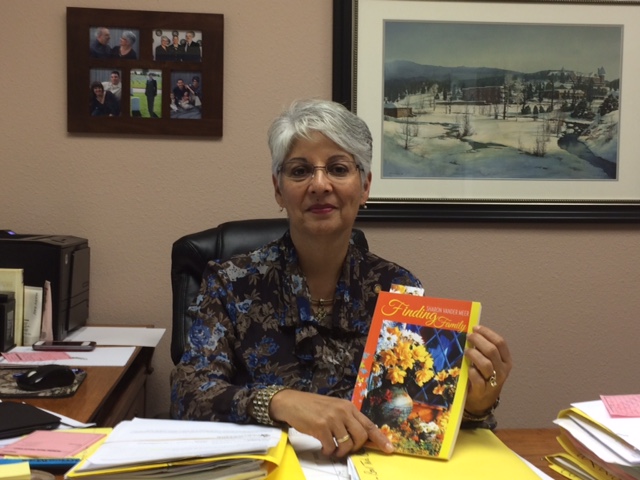
Finding FamilySigh. Just received notification that I was not selected as a winner in the Writer’s Digest Self-Published Book contest. I entered “Finding Family,” my contemporary novel about a family coming together. Didn’t even make honorable mention. I tell myself winning would have been a miracle given there were more than 2,600 entires. It doesn’t help. It still stings.

No, I wasn’t among the select few. What does it take to get the attention of judges in these types of contests? I wish I knew. Actually, I do know. It takes being a cut above, working hard, and creating a book that has appeal. Too whom and in what way? That is the mystery and one I have yet to figure out.

The truth is I don’t even know how to sell my books beyond the few hundred I’ve already sold. I see books on Amazon by unknown authors with more than 500 Amazon reviews. Really? How does that happen? I don’t think I have 500 readers collectively who have read the four books I’ve written, and less than five (meaning as few as two) reviews on Amazon. Does it matter? Hell if I know. It is admittedly a measure of the number of people who have read the book being reviewed, otherwise they wouldn’t comment, right?

So what am I not good at, folks? Writing or marketing? Or both. Egads! I don’t know if I want an answer to that.

Either way I appreciate the “There Are No Rules” October platform building challenge for today. Build a Time Management Plan, Robert Brewer tells stalwart participants. Why does it matter to my fragile writing ego? Because one of the tasks I need to include in my Time Mangement PLan is learning how to market my work. This is extrememly hard for me. I can sell just about anything to anybody, but I’m hesitant and perhaps a wee bit fearful about selling my work. I’ve read way too many bad self-published e-books. On the other hand, I’ve read some really good ones. I count my books among the good ones… except for those darned errors overlooked in editing and the other little imperfections that drive me nuts after the fact.

Success at anything and time management are kissing cousins. Knowing what you are going to do and when are key elements for being productive. My problem is believing I can do more and consequently over scheduling. What I have learned is the importance of doing less more effectively. Better to do three things well than ten things haphazardly or with guilt-ridden not at all. Today’s challenge is a good exercise about writing with intention, and building a marketing strategy with intention. Now to do it.

But I need to go to the store, and post office, and there’s that luncheon I need to attend, and later I think I’ll clean my closet, and then I’ll…

The pain of rejection is the self-doubt it inflects, even if for a little while. It taints my energy and makes me want to do anything but write, which is why I sat down and made myself write this post. Getting back on the horse, as the cliché says. I don’t know if I will ever write another book of ficiton, but I have lots of other writing to do. So onward and upward with a smile and hope, the Band-Aids to a wounded writing spirit.

Write to Excite Engagement

BloggingDo your readers read you?

My platform challenge for today is to write a post that includes a call to action. I try to do that in every post, with the exception of my poetry. I don’t always get a call to action in, but I try. For example, the second two words in this post are a call to action. By clicking on the link you can learn more about the platform challenge facilitated by Writer’s Digest senior content editor Robert Lee Brewer. See, I just did it again. If you click on the word “poetry” you will find a poem I wrote following the shooting in Roseburg, Oregon.

The purpose of a CTA is to engage readers at a deeper level. I have written a number of book reviews and other content that is all over the place. To get as much mileage as possible out of those posts, I can subtly guide readers to previous posts on similar subjects, or I can be deliberate about promoting my book, “Finding Family.” The goal is to encourage readers to learn more by clicking on a link.

As a really lousy self-promoter, I’m not much good at the call to action for my stuff, but I’m more than happy to take readers to information I believe they will enjoy or get something from.

Why reader response matters

In some ways posting creates an opportunity for dialogue between the writer and her readers. The comment section at the bottom of posts is there for a reason. As a writer it is encouraging to me when someone comments, positive or negative. Why? Because as a writer I know my work is being read. When it just sits there, even though I can count the clicks on my analytics page, I don’t really know how much of what I have written is being read and thought about. Comments are the lifeblood of a post. So please comment below.

If comments are the lifeblood, “like” and “share” are the heartbeat. These two actions by a reader lets others know the content touched something in him and inspired a response. So when you read a post, mine or anyone else’s, like it and share it with friends and family.

I want to thank anyone who has ever commented, liked or shared one of my posts. It means more to me than you can imagine.


And the winner is…

Ruth MaresThank you Ruth Mares, for subscribing to One Roof Publishing and congratulations on winning a free copy of “Finding Family.”

I didn’t reach my goal of 100, but I did get new subscribers so it was worth the effort. With that in mind, I am extending the offer. Become a subscriber by the end of October and you will  receive a free PDF copy of my chap book of poetry, “Lines,” and be entered into a drawing for a free signed copy of “Finding Family.” Don’t forget, when you get the e-mail that you are now a subscriber, you must verify that you accept by clinking on the link.

Coming soon: I’m going to try something new, a serialization of my sequel to Thunder Prime: Fog Island (published also as The Ballad of Bawdy McClure). It will sort of (I hope) be something along the lines of the Perils of Pauline, you know, a cliff hanger at the end of every episode/chapter. I don’t know if this can be made to work, but I’m going to give it a shot. In the end I will have a book length manuscript for publication. The first episode will be free; there will be a nominal charge for access to following episodes. Sound intriguing? Stay tuned.

Remember to subscribe to receive a free PDF of my book of poetry and a chance to win a free copy of Finding Family.

Writer’s Block

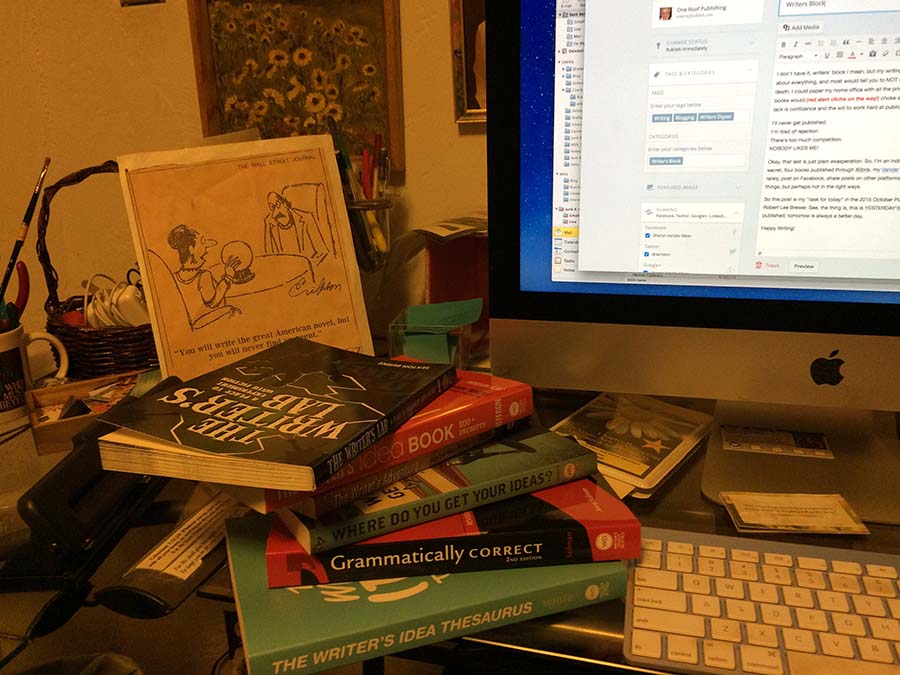
I don’t have it, writer’s block I mean, but my writing sort of wanders all over the place. One Roof Publishing is where I write about everything, and most would tell you to NOT do that. Focus. Write. Get it right. Do it regularly. Make it work. SEO it to death. I could paper my home office with all the printouts I have from other people’s blogs about writing. My library of writing books would (red alert cliche on the way!) choke a horse. I’m a serious contender for Writing Student of the Month. What I lack is confidence and the will to work hard at publication. It’s too easy to slip into negative mode:

Write NowI’ll never get published.
I’m tired of rejection.
There’s too much competition.
NOBODY LIKES ME!

Okay, that last is just plain exasperation. So, I’m an indie author with one desktop published book of poetry I keep a deep dark secret, four books published through Xlibris, my Vander Meer Books website, and this confetti blog. So I write. I Tweet but rarely, post on Facebook, share posts on other platforms, but I can’t even tell you what they are. So I’m doing all the right things, but perhaps not in the right ways.

So this post is my “task for today” in the 2015 October Platform Challenge facilitated by Writer’s Digest senior content editor Robert Lee Brewer. See, the thing is, this is YESTERDAY’S task, and that sort of explains why I don’t get things done and published; tomorrow is always a better day.

Happy Writing!

A blatant pitch for book sales

…from a terrible marketer

Finding Family

My problem with writing has nothing to do with writing; it has to do with selling. Every book I have written is worth reading, the last one perhaps more so than the first three. Not because it is a better book, but because I learned a lot between book one and book four.

What I should have had for all my books is a good editor. Reality check here. As an indie author, I can’t afford an editor. A good editor is worth what he or she charges, no doubt about it, but given that I’m so horrible at selling my work, I’d never recover my costs. The argument in favor of an editor is that grammar and punctuation improve copy so it will sell better.

Uh, “Fifty Shades of Grey” anyone?

Hel-lo-o!

I have not read the books because erotica isn’t my cup of tea, so my statements here are based on reviews and commentary, written by people who write for a living. Many of them are baffled by the success of these books, which by some accounts are poorly constructed, have questionable content, and basic plot problems – as in there isn’t one. And yet, “50” and its sequels have netted author EL James A LOT OF MONEY! She has sold MILLIONS of copies and landed a lucrative deal for movie rights. I don’t know if she had an editor, but if she did, she paid her too much. What James does have is an identified audience looking for cheap thrills. Erotica sells.

So, what does it take to sell books? That is a very complex question. It helps that –

a) You have absolute confidence your book is the best thing that’s ever been written.
b) That you are willing to wring out of every one you know a promise to do a review (POSITIVE ONLY) and post it on Amazon and Good Reads and wherever else they can find to post it on your behalf.
c) Know your audience, or at the very least, have one.

First off, I hesitate to use friends to promote my work. Number one, I’m afraid they will feel obligated to say yes while thinking, “Is she kidding me? This thing is the worst thing I’ve ever read!?”

And second… forget it, I can’t get past number one. It’s the fear of “not being good enough” that plagues even accomplished writers.

The thing is, I believe my books are quite good. Good enough, in fact, to fly magically off the shelves without much help from me. Won’t happen. Like all authors, I must work at promoting my books every single chance I get, something I am totally not good at.

A second and equally important factor is that, “knowing your audience,” thing.

I may not be there yet when it comes to confidence, but identifying my audience is at a whole other level. People who like to read books? Hmmm, yes, but there is so much more to it. The whole genre thing drives me nuts. Plus I haven’t written just one kind of book. I’ve written the books I like to write. One is a book of inspirational reading, two are sci-fi, and the fourth is a contemporary novel about a women of a certain age.

In “Finding Family,” it is clear early on that Lilly Irish has never understood her worth to others. Following the death of her husband she becomes accustomed to living alone. She is stubbornly independent. And then her dead sister’s daughter and her three children arrive with their dog. Calm turns to chaos and along the way Lilly… well, if I said any more I’d be giving the story away.

This story is funny and sad, just like life. You will recognize the characters because they’re like all of us, trying to find their way in life, day-by-day. “Finding Family,” characters aren’t based on any one in particular, or any family in particular; it is grounded in the reality that no one is perfect. How these imperfect people come together makes for an entertaining and satisfying read.

And yes, this is a sales pitch for “Finding Family,” and a request that you buy it, read it, and post a review – brief or long – on Amazon and Good Reads and wherever else you can. I would like for it to be positive, but I would rather it be honest.

Thanks,
Sharon

NOTE: I have Finding Family available for purchase. If you would like to order a book directly from me e-mail me at fsharon@msn.com. Book price is $19.99.

Finding Family is available at Amazon and other online book retailers in soft cover and as an e-book from XLIBRIS

Paperback: 232 pages
Publisher: XLIBRIS
Language: English
ISBN-10: 1499035489
ISBN-13: 978-1499035483


Also look for my latest book:
Thunder Prime Hunter’s Light
Paperback $15
Digital Format $2.99 


Random Poetry

I am participating in the Writer’s Digest Poetic Asides April Poem a Day challenge. I’ve done it before and enjoyed it tremendously. This is the first year I started on the first day and written (for the most part) every day. The days I miss I catch up on. The poems below are from previous years and are random and unrelated. I picked them for that reason. As a poet I’m a bit of a fraud. I don’t give a lot of thought to poetic style. I write stuff, call it a poem and slap it up there. Poetry is like any other writing. You have a story to tell and you tell it in the way that seems right. Some stories are better told in poetic form, short or long, it matters not.

BURSTING WITH BAGS

First there was one,
it took up no room at all,
I stuffed it into a bag,
a small one in the hall.

I went back to the store
and acquired more to add
to the bag in the hall.
Isn’t that just a little sad?

The bag in the hall
bulged when I next came back.
It isn’t much, I said to myself.
Two more went into the sack.

Suddenly plastic
Spilled out upon the floor!
The bags rose higher,
blocking the door.

With a sigh and deep regret,
I admitted there is no point
In keeping these damned bags
all over the joint!


SHADOWS

Shadows creep across the floor,
inky black spreading toward the door.
Someone is there, waiting
on my nerves grating, grating,
hovering and so drear,
beating my senses into fear.
The moon so bright does appear.
What did I fear that was so near?
I cannot say for now ‘tis consumed
by moonlight shining into my room.


THE QUEEN

Shades and shapes billowed and played
Around the queen who ruled
With power deep in the changeling’s keep
To keep her subjects schooled.
She wove a web of truth and care
And left none behind.
On the trail naught would fail
Not in the hive’s collective mind.

______________________

Thank you for being a reader/subscriber. It is my goal to present informative, interesting and creative content on this site. Your likes, shares and comments are welcomed and hugely appreciated.


Follow Sharon at:
www.vandermeerbooks.com
https://www.facebook.com/vandermeerbooks
Amazon Author Central


Beautiful Outlaw

Was Jesus Playful, Disruptive, Extravagant? Read On

Have you ever wondered what Jesus was like? Not the Jesus nailed to the cross, but the living, breathing, human Jesus, the man who spent 33 years living as we live. In his book “Beautiful Outlaw: Experiencing the Playful, Disruptive, Extravagant Personality of Jesus,” author John Eldredge takes what some might consider a radical and unreligious approach to exploring the personality of Jesus.

I suspect he’s okay with that kind of criticism. It’s sort of the point of the book. Religion as we know it is nothing like the world in Jesus’ day. “Church” wasn’t practiced in the ways it is in the modern world. Too often we see the “don’ts” of religion, and not the hope central to the teachings of Christ. Being in the temple (church) and being part of the body of Christ aren’t in the same ballpark.

Eldredge points out that In his day Jesus was more likely to upset the religious establishment than he was to agree with its leaders. Most of Jesus’ miracles, Eldredge says, were done outside the normal worship experience. Beautiful OutlawAnd Jesus shied away from no one.

Beautiful outlaw is a good description for a man who often hung out with all the wrong people, at least as defined by the religious leaders. “Beautiful Outlaw” made me smile, laugh outright, and often caused me to nod my head in agreement. Eldredge shows Jesus exactly as he was in this life, fully human in his interactions with others. He points out that despite all the religious art that portrays Jesus as a martyred saint complete with halo, Jesus was a man with an intense interest in people. He didn’t back down from confrontation. Other than driving the money changers out of his Father’s house, he showed no tendency toward violence, nor did he seek recognition or power.

Jesus never forgot his purpose. He was not condescending, proud, vain, or loud. He asked as many questions as he answered. His ministry had little to do with what has come to be known as organized religion. Eldredge leads his readers to see Jesus in the way you would see your very best friend. Someone you can talk to; someone who will listen.

John Eldredge is an author, counselor, and teacher. As president of Ransomed Heart Ministries, he is devoted to helping people widen their understanding of God. He has written a number of books on spirituality and living in relationship with God. John lives in Colorado Spring with his wife and three sons. Click here to read an excerpt from “Beautiful Outlaw.”

If you love to read books that bring insight and new ways of thinking about Jesus, religion, and spirituality, I recommend this book.

“Beautiful Outlaw: Experiencing the Playful, Disruptive, Extravagant Personality of Jesus,” is available in e-book, paperback, hard cover and audio versions. Published October 2011 by FaithWords, book prices range from $9.99 (e-book) to $17.47 (Hard Cover).

__________________________________

Please share this post. Comments are welcomed and encouraged. Thanks for reading.